


On my first day of orientation at Emerson College for my Masters in Publishing I was asked to turn to a person sitting next to me and tell them what I wanted to do with my life. I was expected to spill (in a succinct manner) all of my publishing goals and ambitions to a stranger. Lucky for me, I met Amanda Diehl, a blogger for Smart Bitches, Trashy Books, Book Riot and all around publishing inspiration (her blog is here: Diary of a Young Semi-Professional ) and to my surprise I had an answer for her. I wanted to work with international literature. Literature in translation. I wanted to be constantly challenged and inspired by deserving and unique literature. I wanted to work with the kinds of presses that do this work. And that means indies and even more specifically it usually means non-profits.
In an industry where most entry-level devotees and interns are looking for the New York City publishing scene, a job at a Big Five press, and the next Hemingway of Fitzgerald to fit into their back pocket I had decided to do the complete opposite. Mainly, because that publishing industry scenario is hardly the norm (actually, it’s bullshit) and because doesn’t working with foreign offices, translators, and presses like Open Letter, New Directions, and Beacon Press sound way more exciting?
I would also argue that these presses do fundamentally important work, The promotion of unique, thought provoking literature, whether it’s international, translated or not, encourages our society to think outside of the narrow spaces brought to us by mainstream media and contemporary popular literature. Indie presses, non-profit presses, they do just that.
They bring something different to the page.
I couldn’t say it better than this and I encourage anyone that’s interested to read the full article “I Want You To Start Your Own Publishing House.” I haven’t been able to get it out of my head.
There is a real value today in treating readers not merely as consumers but as agents of cultural change, who now have the chance to become deeply invested in your publishing mission as a business as well as a philosophical enterprise. It is in the best interest of every independent publisher to cultivate an engaged readership that will make a lasting impact on our culture in the long run.”
~Will Evans


The Weirdness by Jeremy P. Bushnell
Melville House publishes the coolest books and The Weirdness is no exception. It’s funny, irreverent, and different and might be just one large joke about the lengths people go to to get published. Oh, and those satanic fair trade coffee beans? You can buy them from Melville House’s website.
What do you do when you wake up hung over and late for work only to find a stranger on your couch? And what if that stranger turns out to be an Adversarial Manifestation–like Satan, say–who has brewed you a fresh cup of fair-trade coffee? And what if he offers you your life’s goal of making the bestseller list if only you find his missing Lucky Cat and, you know, sign over your soul?
If you’re Billy Ridgeway, you take the coffee.


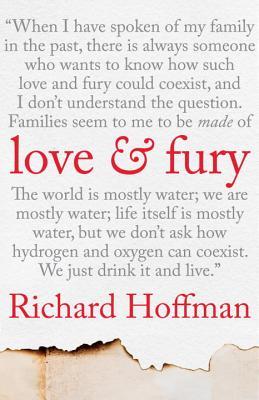
Love & Fury by Richard Hoffman
Richard Hoffman’s latest memoir (released today by Beacon Press!) is a striking reflection on fatherhood and Hoffman’s upbringing in a post World War II blue-collar family. He writes honestly about the racism and sexism he sees in his upbringing and faces these issues head-on as he discusses the imprisonment of the father to his grandchild. His narrative is not politicized but instead details his experiences in the flawed justice and prison systems. The memoir, while weighty, unflinchingly deals with issues of addiction, racism, and the “love and fury” inherent in family relationships.
This will not come clear. It can’t. There is no binary good/bad, glad/sad conclusion to be reached. When I have spoken of my family in the past, there is always someone who wants to know how such love and fury could coexist, and I don’t understand the question. It seems either naive or disingenuous. Families seem to me to be made of love and fury. The world is mostly water; we are mostly water, but we don’t ask how such hydrogen and oxygen can coexist. We just drink it and live. Maybe we wish it were champagne, or root beer, or cider, but we’re not foolish enough to wish it were liquid hydrogen or liquid oxygen.” (28)

I had heard a lot about this collection and was curious to see if the clever wit I associate with Novak as a producer and writer on The Office would translate to his short stories. They’re notoriously tricky to write and even trickier to sell from a publisher’s point of view. Novak, on the other hand, brings something refreshing to his short stories. Sure, sometimes he tries a little too hard to be clever but he is clever. And funny. And biting. And vulnerable. He understands people and so he understands humor. It’s one of the most surprising books out in the market right now and I look forward to his career as a writer.
In Teddy Wayne’s New York Times Review “Out of Character” he writes, “The melancholy sensibility and verbal élan elevate Novak’s book beyond a small-beer exercise in clever monkeyshines and into a stiff literary cocktail, with a healthy pour of vintage Woody Allen and a dash of George Saunders strained through a Donald Barthelme sieve — droll and smart in spades, but often humane and vulnerable, too.” No one could put it better than that.
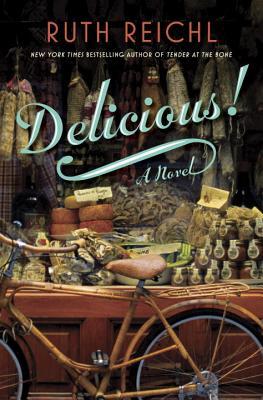
Delicious! by Ruth Reichl
Ruth Reichl’s first work of fiction Delicious! expands her already illustrious career as a chef, critic, and nonfiction writer. Delicious! follows the story of young writer Billie Breslin as she takes a job at the gourmet food magazine Delicious! Little does she know the magazine is about to close (echoing Reichl’s own experiences at the closing of Gourmet) but Billie is kept on to take complaint calls. She discovers the magazine’s library and a stash of letters written during World War I between a young girl, Lulu, and legendary chef James Beard. Reichl’s characters are wonderfully written and the work as a whole is creative, playful, and a delight to read. As chef Barbara Lynch described it, it is “sweet, tangy, and crispy.” Reichl provides a rare insight into the world of gourmet food magazines with their test kitchens, colorful characters, and devotion to food. It’s when Reichl talks about food though that she is at her very best. Her passages describing Billie’s first exploration of the New York culinary scene are some of the best in the book:
“I opened them to find Kim dancing with a molten river of chocolate. I stood hypnotized by the scent and the grace of her motions, which were more beautiful than any ballet. Moving constantly, she caressed the chocolate like a lover, folding it over and over on a slab of white marble, working it to get the texture right. She stopped to feed me a chocolate sprinkled with salt, which had the fierce flavor of the ocean, and another with the resonant intensity of toasted saffron. One chocolate tasted like rain, another of the desert. . . Now the scent changed as Kim began to dip fruit into the chocolate: raspberries, blackberries, tiny strawberries that smelled like violets. She put a chocolate-and-caramel-covered slice of peach into my mouth, and the taste of summer was so intense that I felt the room grow warmer. I lost all sense of time.” (27)
The letters between James Beard and young Lulu, which Reichl says she wrote in one sitting before the ideas for he rest of the book had really come to her, provide an unexpected look at rationing, war recipes, and cooking during World War II, as well as the renown chef James Beard. Delicious! was over far too soon for my taste but luckily for readers Reichl has two more novels in the works.
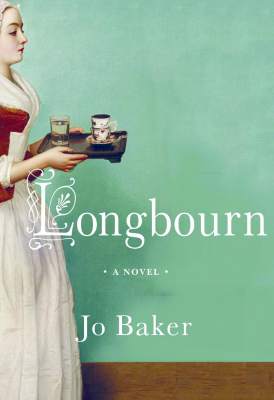
Longbourn by Jo Baker
“If Elizabeth had the washing of her petticoats, Sarah often thought, she’d most likely be a sight more careful with them.”
It seems only natural that trailing on the success of intimate portrayals of servant life like Downton Abbey and Upstairs, Downstairs that someone would think to reimagine servant life at the Bennett household. Few would imagine, however, the startlingly perfect interpretation that is Jo Baker’s Longbourn. Baker describes life “below stairs” with an unflinching honesty, depicting the hard lives and the constant struggle of the servants at Longbourn and the lower classes. The threat of the entailment seems more real when we as readers step back from Mrs. Bennett’s boisterous complaints to Mrs. Hill’s quiet contemplations about how she will survive if Mr. Collins brings his own servants. She, unlike Mrs. Bennet and her daughters, has no allowance.
Told through Sarah’s perspective, as a housemaid at Longbourn, the aspects of Pride and Prejudice that simmer beneath the surface, are told in detail, adding a darker, more realistic portrayal of the story. In Loungborn we see tales of war and army life and the gap between the landowning gentry and the working classes.In addition we see Austen’s characters in a different light, speifically Mr. Bennett, and the injustices of women’s second class position in society. Hints of the romance between Elizabeth and Darcy abound but are quickly forgotten amidst Sarah’s relationship with John Smith which is equally romantic.
If Jane Austen’s books are said to sparkle with their wit and characters then Jo Baker’s story is a novel of a different kind. Longbourn doesn’t sparkle. It instead has the freshly scrubbed appearance of a kitchen table in the servant’s hall, It’s clean and honest but a little raw.

