Announcing the 2018 Man Booker International Prize Shortlist

The Man Booker International Prize honoring the finest works of translated fiction from around the world released its shortlist, narrowing down the list from thirteen books to six.

The winner of the 2018 prize will be announced on May 22, with the £50,000 prize being divided equally between the author and the translator of the winning book.

Lisa Appignanesi, chair of the 2018 judging panel commented on the shortlist saying, “This is a shortlist emblematic of the many adventures of fiction—its making and reading. We have mesmeric meditations, raucous, sexy, state-of-the-nation stories, haunting sparseness and sprawling tales; enigmatic cabinets of curiosity, and daring acts of imaginative projection—all this plus sparkling encounters with prose in translation. We were sorry to have shed so much of our longlist talent, but this is a shortlist to read and re-read.”

And here’s the list:                  

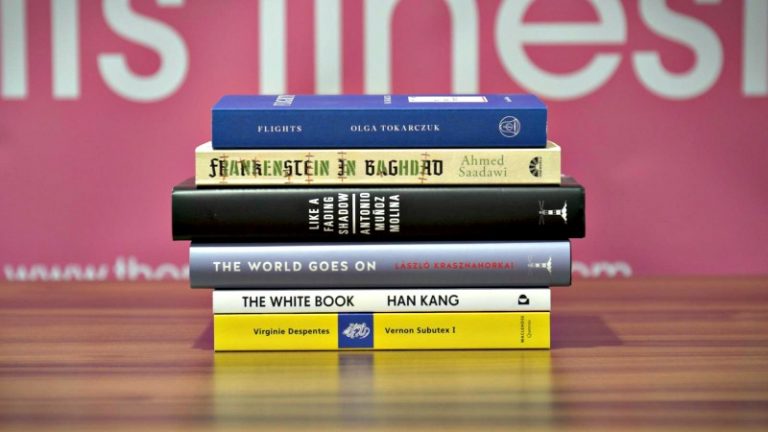
Vernon Subutex 1 by Virginie Despentes (France), translated by Frank Wynne (MacLehose Press)

The White Book by Han Kang (South Korea), translated by Deborah Smith (Portobello Books)

The World Goes On by László Krasznahorkai (Hungary), John Batki, Ottilie Mulzet & George Szirtes (Tuskar Rock Press)

Like a Fading Shadow by Antonio Muñoz Molina (Spain), translated by Camilo A. Ramirez (Tuskar Rock Press)

Frankenstein in Baghdad by Ahmed Saadawi (Iraq), translated by Jonathan Wright (Oneworld)

Flights by Olga Tokarczuk (Poland), translated by Jennifer Croft (Fitzcarraldo Editions)

Looking for even more suggestions for some international reads? Check out the full 2018 longlist with all thirteen titles!

This post was originally published on Book Riot.

Birthday Adventures

There’s nothing quite like leftover birthday cake and coffee the morning after your birthday celebration. Especially when it’s the amazing birthday cake from Myers + Chang. It was a wonderful weekend of great food and even better friends!

Announcing the Best Translated Book Award 2018 Longlist

The Best Translated Book Award 2018 Longlist has been announced! Celebrating its eleventh year of honoring literature in translation, the Best Translated Book Awards announced the 2018 longlists for both its fiction and poetry award at The Millions.

“Combined, the longlists reflect the diversity of international books published last year by featuring authors from twenty-five different countries, writing in eighteen languages, and published by twenty-six different presses. New Directions and Seagull Books are the only presses to have titles on both longlists, with Feminist Press, New Directions, Open Letter, and Ugly Duckling Presse receiving the most nominations, with three longlisted titles each.”

The finalists will also be announced at The Millions on May 15th, and the winners will be announced on May 31st as part of the New York Rights Fair following the 4:30 panel on “Translated Literature Today: A Decade of Growth.”

Best Translated Book Award 2018 Fiction Longlist

Fiction Longlist:

Incest by Christine Angot, translated from the French by Tess Lewis (France, Archipelago)

Suzanne by Anaïs Barbeau-Lavalette, translated from the French by Rhonda Mullins (Canada, Coach House)

Tómas Jónsson, Bestseller by Guðbergur Bergsson, translated from the Icelandic by Lytton Smith (Iceland, Open Letter Books)

Compass by Mathias Énard, translated from the French by Charlotte Mandell (France, New Directions)

Bergeners by Tomas Espedal, translated from the Norwegian by James Anderson (Norway, Seagull Books)

The Invented Part by Rodrigo Fresán, translated from the Spanish by Will Vanderhyden (Argentina, Open Letter Books)

Return to the Dark Valley by Santiago Gamboa, translated from the Spanish by Howard Curtis (Colombia, Europa Editions)

Affections by Rodrigo Hasbún, translated from the Spanish by Sophie Hughes (Bolivia, Simon and Schuster)

Old Rendering Plant by Wolfgang Hilbig, translated from the German by Isabel Fargo Cole (Germany, Two Lines Press)

I Am the Brother of XX by Fleur Jaeggy, translated from the Italian by Gini Alhadeff (Switzerland, New Directions)

You Should Have Left by Daniel Kehlmann, translated from the German by Ross Benjamin (Germany, Pantheon)

Chasing the King of Hearts by Hanna Krall, translated from the Polish by Philip Boehm (Poland, Feminist Press)

Beyond the Rice Fields by Naivo, translated from the French by Allison M. Charette (Madagascar, Restless Books)

My Heart Hemmed In by Marie NDiaye, translated from the French by Jordan Stump (France, Two Lines Press)

Savage Theories by Pola Oloixarac, translated from the Spanish by Roy Kesey (Argentina, Soho Press)

August by Romina Paula, translated from the Spanish by Jennifer Croft (Argentina, Feminist Press)

The Magician of Vienna by Sergio Pitol, translated from the Spanish by George Henson (Mexico, Deep Vellum)

The Iliac Crest by Cristina Rivera Garza, translated from the Spanish by Sarah Booker (Mexico, Feminist Press)

Fever Dream by Samanta Schweblin, translated from the Spanish by Megan McDowell (Argentina, Riverhead)

Ghachar Ghochar by Vivek Shanbhag, translated from the Kannada by Srinath Perur (India, Penguin)

For Isabel: A Mandala by Antonio Tabucchi, translated from the Italian by Elizabeth Harris (Italy, Archipelago)

Ebola 76 by Amir Tag Elsir, translated from the Arabic by Charis Bredin (Sudan, Darf Publishers)

The Last Bell by Johannes Urzidil, translated from the German by David Burnett (Germany, Pushkin Press)

Radiant Terminus by Antoine Volodine, translated from the French by Jeffery Zuckerman (France, Open Letter)

Remains of Life by Wu He, translated from the Chinese by Michael Berry (Taiwan, Columbia University Press)
Best Translated Book Award 2018 Poetry Longlist

Poetry Longlist:

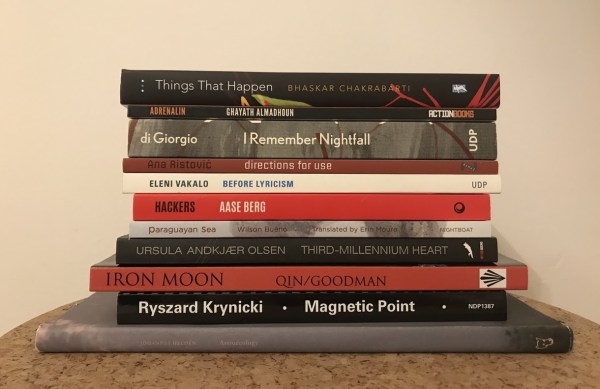
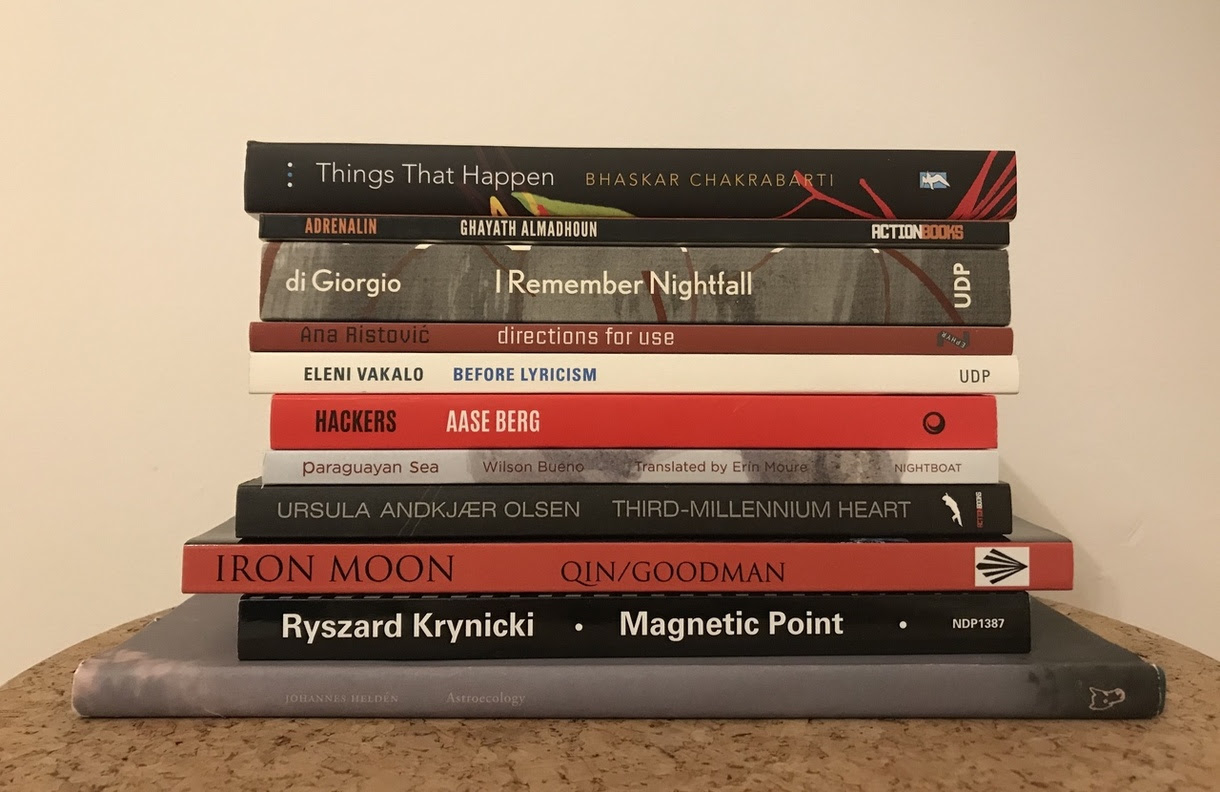
Adrenalin by Ghayath Almadhoun, translated from the Arabic by Catherine Cobham (Syria, Action Books)

Hackers by Aase Berg, translated from the Swedish by Johannes Goransson (Sweden, Black Ocean Press)

Paraguayan Sea by Wilson Bueno, translated from the Portunhol and Guarani to Frenglish and Guarani by Erin Moore (Brazil, Nightboat Books)

Things That Happen by Bhaskar Chakrabarti, translated from the Bengali by Arunava Sinha (India, Seagull Books)

I Remember Nightfall by Marosa di Giorgio, translated from the Spanish by Jeannine Marie Pitas (Uruguay, Ugly Duckling Presse)

Astroecology by Johannes Heldén, translated from the Swedish by Kirkwood Adams, Elizabeth Clark Wessel, and Johannes Heldén (Sweden, Argos Books)

Magnetic Point by Ryszard Krynicki, translated from the Polish by Clare Cavanagh (Poland, New Directions)

Third-Millennium Heart by Ursula Andkjaer Olsen, translated from the Danish by Katrine Øgaard Jensen (Denmark, Broken Dimanche Press)

Spiral Staircase by Hirato Renkichi, translated from the Japanese by Sho Sugita (Japan, Ugly Duckling Presse)

Directions for Use by Ana Ristović, translated from the Serbian by Steven Teref and Maja Teref (Serbia, Zephyr Press)

Before Lyricism by Eleni Vakalo, translated from the Greek by Karen Emmerich (Greece, Ugly Duckling Presse)

Iron Moon by Chinese Migrant Worker Poetry edited by Qin Xiaoyu, translated from the Chinese by Eleanor Goodman (China, White Pine Press)

Founded in 2007, the Best Translated Book Award brings attention to the best works of translated literature published in the previous year. The winning author and translator each receive a $5,000 cash prize for both the fiction and poetry award, totaling $20,000.  Thanks to grant funds from the Amazon Literary Partnership the award has given out more than $140,000 to international authors and their translators.

For more information, visit the official Best Translated Book Award site and follow the award on Twitter. Over the next month, leading up to the announcement of the shortlists, Three Percent will be featuring a different title each day as part of the “Why This Book Should Win” series.

This post was originally published on Book Riot.

Brontë Quotes About Life, Love, and Loss

The Brontë sisters—Charlotte, Emily, and Anne—are known and loved for their passionate heroines (usually striding across wild Yorkshire moors), subversive stories, and secret lives. Enjoy these stirring Brontë quotes about life, love, and loss.

“You know full well as I do the value of sisters’ affections: There is nothing like it in this world.” —Charlotte Brontë, The Professor

“She’s hard to guide any way but her own.” —Emily Brontë, Wuthering Heights

“If she were more perfect, she would be less interesting.” —Anne Brontë, The Tenant of Wildfell Hall

“I’m mortally sorry that you are not worth knocking down!” —Emily Brontë, Wuthering Heights

I would always rather be happy than dignified.” —Charlotte Brontë, Jane Eyre

“He’s more myself than I am. Whatever our souls are made of, his and mine are the same…” —Emily Brontë, Wuthering Heights

“It is foolish to wish for beauty. Sensible people never either desire it for themselves or care about it in others. If the mind be but well cultivated, and the heart well disposed, no one ever cares for the exterior.” —Anne Brontë, Agnes Grey

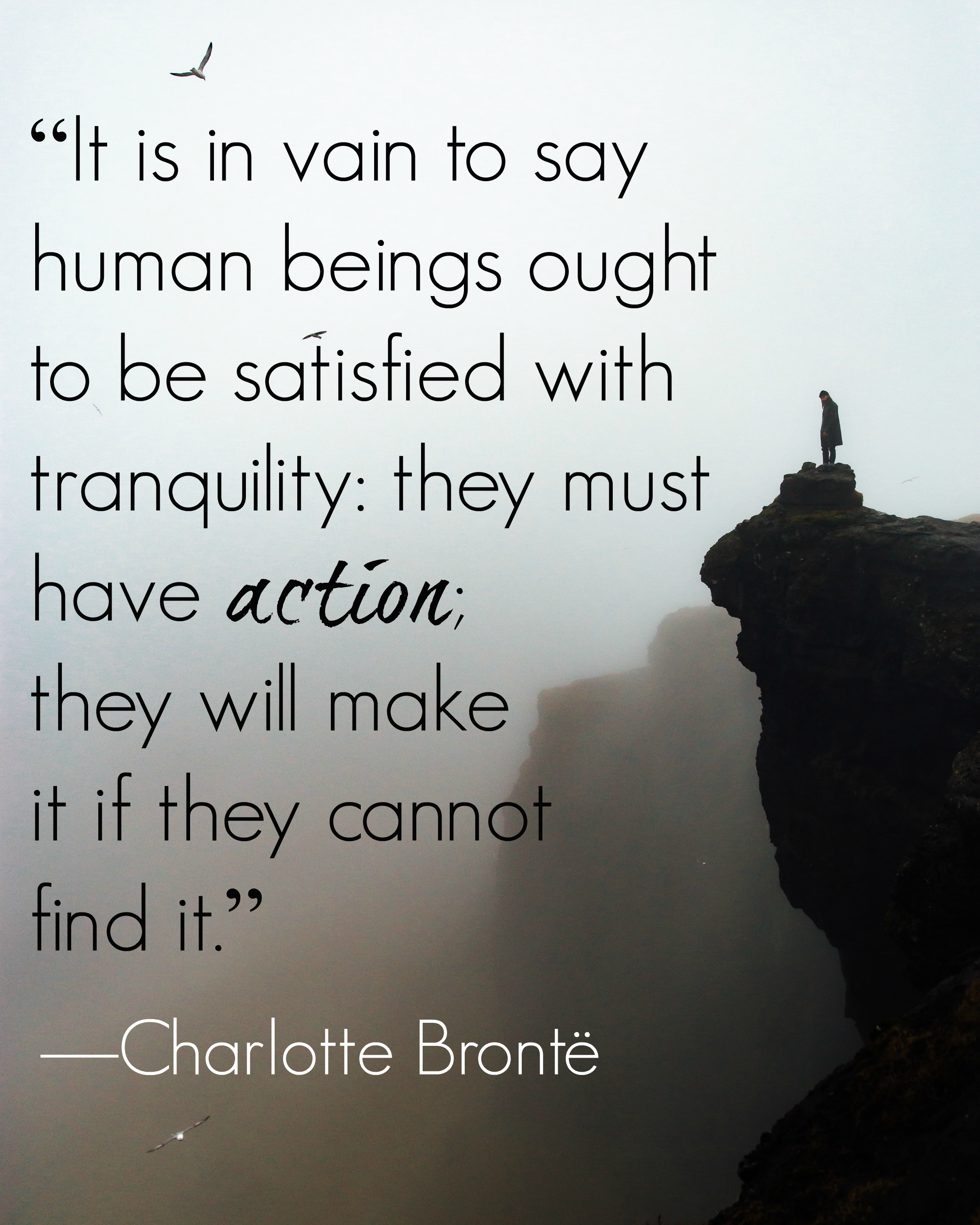
“It is in vain to say human beings ought to be satisfied with tranquility: they must have action; they will make it if they cannot find it.” —Charlotte Brontë, Jane Eyre

“Because, my dear, beauty is that quality which, next to money, is generally the most attractive to the worst kinds of men.” —Anne Brontë, The Tenant of Wildfell Hall

“If all else perished, and he remained, I should still continue to be; and if all else remained, and he were annihilated, the universe would turn to a mighty stranger: I should not seem a part of it.” —Emily Brontë, Wuthering Heights

“Smiles and tears are so alike with me, they are neither of them confined to any particular feelings: I often cry when I am happy, and smile when I am sad.” —Anne Brontë, The Tenant of Wildfell Hall

“I remembered that the real world was wide, and that a varied field of hopes and fears, of sensations and excitements, awaited those who had the courage to go forth into its expanse, to seek real knowledge of life amidst its perils.” —Charlotte Brontë, Jane Eyre

“The ties that bind us to life are tougher than you imagine, or than any one can who has not felt how roughly they may be pulled without breaking.” —Anne Brontë, Agnes Grey

“I wish I were a girl again, half savage and hardy, and free…Why am I so changed?” —Emily Brontë, Wuthering Heights

“The eagerness of a listener quickens the tongue of a narrator.” —Charlotte Brontë, Jane Eyre

“No one can be happy in eternal solitude.” —Anne Brontë, The Tenant of Wildfell Hall

“I have not broken your heart—you have broken it; and in breaking it, you have broken mine.” —Emily Brontë, Wuthering Heights

“It is a pity that doing one’s best does not always answer.” —Charlotte Brontë, Jane Eyre

“Increase of love brings increase of happiness, when it is mutual, and pure as that will be.” —Anne Brontë, The Tenant of Wildfell Hall

“Reading is my favorite occupation, when I have leisure for it and books to read.” —Anne Brontë, Agnes Grey

“I cannot live without my life! I cannot live without my soul!” —Emily Brontë, Wuthering Heights

“I am no bird; and no net ensnares me; I am a free human being with an independent will, which I now exert to leave you.” —Charlotte Brontë, Jane Eyre

“How odd it is that we so often weep for each other’s distresses, when we shed not a tear for our own!” —Anne Brontë, The Tenant of Wildfell Hall

“You are human and fallible.” —Charlotte Brontë, Jane Eyre

“My heart is too thoroughly dried to be broken in a hurry, and I mean to live as long as I can” —Anne Brontë, The Tenant of Wildfell Hall

I am not an angel, and I will not be one till I die: I will be myself.” —Charlotte Brontë, Jane Eyre

Do you have favorite Brontë quotes that’s aren’t on the list? Share them in the comments! Is Anne your favorite? Check out Carolina Ciucci’s Reasons I Love Anne Brontë (And Why You Should Too). Or maybe Charlotte is the Brontë of your heart and Jane Eyre is your favorite novel ever? Here are 16 Beautiful Jane Eyre Book Covers and The 35 Best Lines from Jane Eyre.

This post was originally published on Book Riot.
Inbox/Outbox

My inbox/outbox this week is very in line with my wheelhouse—it’s all international literature written by women! It’s been an amazing week of reading. Everything I picked out was gorgeously written and engaging. Here’s the final list of what I picked up this week, what I read, and what’s in my queue.

Inbox

Strange Weather in Tokyo: A Novel by Hiromi Kawakami, translated by Allison Markin Powell

I’ve been on a Hiromi Kawakami kick lately—I just finished Manazuru and Record of a Night Too Brief—and I can’t wait to start this! Shortlisted for the Man Asian Literary Prize, Strange Weather in Tokyo is a sweet and poignant story of love and loneliness. Tsukiko is 38, lives alone, works in an office, and is not entirely satisfied with her life when she runs into a former high school teacher, her “sensei,” at a bar one night. They talk and over time this “hesitant intimacy” grows into something more. The jacket copy calls it a “moving, funny, and immersive tale of modern Japan and old-fashioned romance.” And if that’s not enough, I hear that Strange Weather has amazing passages describing Japanese food and drink, and I’m a sucker for books about food and love.

Outbox

The Chandelier by Clarice Lispector, translated by Benjamin Moser and Magdalena Edwards 

The Chandelier is Clarice Lispector’s second novel—now translated and published for the first time in English. It just came out this past week and it’s been hotly anticipated by devoted Lispector fans (myself included.) It’s an intense and interior novel following the story of one woman’s life as she seeks freedom and meaning, but it’s also so much more than that. Benjamin Moser, her translator and biographer, writes that it “stands out in a strange and difficult body of work, as perhaps her strangest and most difficult book.” The writing is powerful and strange, fluid and crushing. I’d recommend it particularly to fans of Lispector who want to trace the trajectory of her early work to her later masterpieces, like The Passion According to G.H.

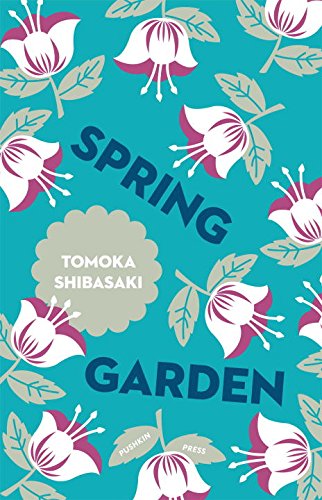
Spring Garden by Tomoka Shibasaki, translated by Polly Barton

Winner of the Akutagawa Prize, Spring Garden is part of the Japanese novella series from Pushkin Press. Spring Garden follows Toro, a divorced man living in an older apartment complex that’s about to be demolished in a rapidly urbanizing Japan. Only a few tenants are left in the building, fulfilling their leases. Toro is drawn into an unusual relationship with Nishi, an artist living upstairs who tells him about her interest in the sky-blue house next door to the complex. The house soon becomes symbolic to both Taro and Nishi “of what is lost, of what has been destroyed, and of what hope may yet lie in the future for both of them.” This poignant novella of memory and loss left me stunned.

In the Queue (What I’m Reading Next)

Secondhand Time: The Last of the Soviets by Svetlana Alexievich, translated by Bela Shayevich

Nobel Prize winner Svetlana Alexievich’s Secondhand Time has been on my radar for years but it has popped back up with the announcement earlier this month that the translator Bela Shayevich and editor Jacques Testard won the inaugural TA First Translation Prize for their work on the book. Secondhand Time is an oral history about the disintegration of the Soviet Union and the emergence of a new Russia in Alexievich’s distinctive documentary style. It looks like a brilliant and powerful must-read.

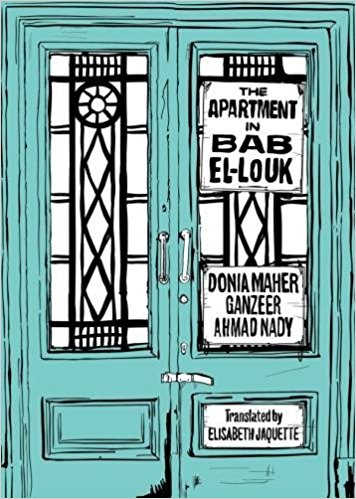
The Apartment in Bab El-Louk by Donia Maher, illustrated by Ganzeer and Ahmed Nady, translated by Elisabeth Jaquette

The Apartment in Bab El-Louk is an award-winning novel by Donia Maher, illustrated by the artist Ganzeer and political cartoonist Ahmed Nady, translated by Elisabeth Jaquette (also the translator of an earth-shattering favorite of mine, The Queue.) It’s a gritty noir poem that follows the reflections of an old recluse in the busy Cairo neighborhood of Bab El-Louk. It’s absolutely gorgeous too (see the design of the book here) and I can’t wait to get my hands on it.

What does your inbox/outbox look like this week?

This post was originally published on Book Riot.

Jane Austen Quotes about Life, Love, and More

Jane Austen is beloved the world over for her wit, charm, and keen understanding of the human heart. Enjoy these Jane Austen quotes about life, love, society, money, marriage, and more!

“Selfishness must always be forgiven you know, because there is no hope of a cure.” —Mansfield Park

“It is always incomprehensible to a man that a woman should ever refuse an offer of marriage. A man always imagines a woman to be ready for anybody who asks her.” —Emma

“Laugh as much as you choose, but you will not laugh me out of my opinion.” —Pride and Prejudice

“I wish, as well as everybody else, to be perfectly happy; but, like everybody else, it must be in my own way.” —Sense and Sensibility

“I always deserve the best treatment because I never put up with any other.” —Emma


“The person, be it gentleman or lady, who has not pleasure in a good novel, must be intolerably stupid.” —Northanger Abbey

“Business, you know, may bring money, but friendship hardly ever does.” —Emma

“A large income is the best recipe for happiness I ever heard of.” —Mansfield Park

“There is no charm equal to tenderness of heart.” —Emma

“Pictures of perfection, as you know, make me sick and wicked” —Jane Austen’s Letters

“I will be calm. I will be mistress of myself.” —Sense and Sensibility

“Is not general incivility the very essence of love?” —Pride and Prejudice

“A woman, especially if she have the misfortune of knowing anything, should conceal it as well as she can.” —Northanger Abbey

“You pierce my soul. I am half agony, half hope.” —Persuasion

“Friendship is certainly the finest balm for the pangs of disappointed love.” —Northanger Abbey

“[N]obody minds having what is too good for them.” —Mansfield Park

“A man does not recover from such a devotion of the heart to such a woman! He ought not; he does not.” —Persuasion

“We have all a better guide in ourselves, if we would attend to it, than any other person can be.” —Mansfield Park

“Nothing ever fatigues me, but doing what I do not like.” —Mansfield Park

“In vain have I struggled. It will not do. My feelings will not be repressed. You must allow me to tell you how ardently I admire and love you.” —Pride and Prejudice

“For what do we live, but to make sport for our neighbors, and laugh at them in our turn?” —Pride and Prejudice

“There is nothing like staying at home for real comfort.” —Emma

“We are to have a tiny party here tonight. I hate tiny parties—they force one into constant exertion.” —Jane Austen’s Letters

“Know your own happiness.” —Sense and Sensibility

“I do not want people to be very agreeable, as it saves me the trouble of liking them a great deal.” —Jane Austen’s Letters

“To be fond of dancing was a certain step towards falling in love.” —Pride and Prejudice

“It is a truth universally acknowledged, that a single man in possession of a good fortune, must be in want of a wife.” —Pride and Prejudice

Do you have favorite Jane Austen quotes that’s aren’t on the list? Share them in the comments!

This post was originally published on Book Riot.

Maine Reading Retreat

This slideshow requires JavaScript.

I visited Maine this weekend for a reading retreat with four of my girlfriends who also work in publishing. We rented a beautiful beach house that overlooked the ocean on one side and the Saco River on the other. It was a beautiful house and we sat near the fireplace, read books, cooked together, and had the most amazing time. Compared to living in the city, it was so quiet and peaceful—perfect for getting a lot of reading and writing done! Here are some of my reading highlights from the trip:

  • Manazuru by Hiromi Kawakami, translated from the Japanese by Michael Emmerich: This was my first read of the weekend and it’s this beautiful, profound, haunting story of loss. Twelve years ago Kei’s husband, Rei, disappeared and she was left alone with their daughter. Now we watch Kei struggle to move on and put the past behind her as she’s haunted by ghosts both figuratively and literally.
  • The Hazel Wood by Melissa Albert: I loved this book! It’s a dark, clever, startling debut and its got elements of fairy tales and Alice in Wonderland. I was lost in it for hours, absolutely enthralled by the writing and the beautiful design.
  • Heart Berries: A Memoir by Terese Marie Mailhot: Heart Berries is a powerful memoir of Terese Marie Mailhot’s coming of age on the Seabird Island Indian Reservation in the Pacific Northwest. The memoir is one of struggle, as she details her dysfunctional upbringing and challenges indigenous women face, but ultimately one of strength and will.

Dark Books in Translation For Dark Winter Nights

I find that there’s nothing better for a dark winter night than a dark, strange book. Maybe it’s a thriller or a mystery, or maybe a collection of stories, but I love a good creepy book. I’ve collected here some dark books in translation for cold winter nights. All of these books are short, written by women (who better to really scare you?), and absolutely unsettling.

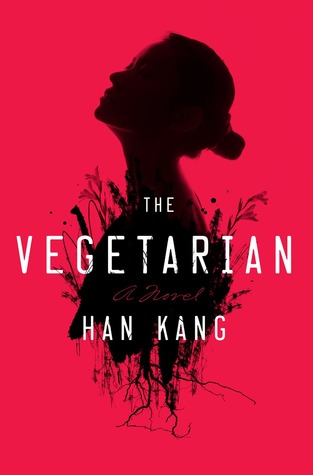
The Vegetarian by Han Kang, Translated by Deborah Smith

I love Man Booker International Prize–Winner The Vegetarian by Han Kang. It’s a beautiful and provocative story about a woman, Yeong-hye, who begins to have horrible nightmares—of blood and carnage—and in order to clear her mind and rid herself of these dreams she becomes a vegetarian. The story becomes one of control and power as her husband and family try to break her into submission, back into the norms of Korean society. To further emphasize her lack of control, Yeong-hye’s own story is told by others, in three parts, first by her husband, then her brother-in-law, and finally by her sister. It’s a dark, fascinating book that you won’t be able to stop thinking about it.

Things We Lost in the Fire: Stories by Mariana Enriquez, Translated by Megan McDowell 

I was blown away by this collection of dark, macabre short stories set in contemporary Argentina. They are stories of ghosts, disappearances, violence, inequality, and more and I promise that you will be haunted by them. My favorites were stories of obsession like “The Dirty Kid” in which a young professional woman discovers that a local child has been killed and mutilated, and “The Neighbor’s Courtyard,” a story of an ex-social worker who believes her neighbor has a child chained up in the backyard. The collection is reminiscent of Shirley Jackson and I would recommend it to anyone who enjoyed Her Body and Other Parties: Stories by Carmen Maria Machado.

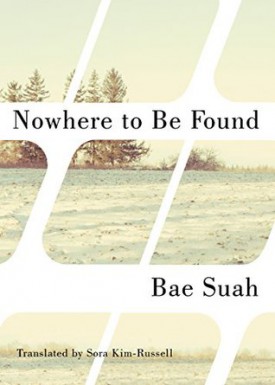
Nowhere to Be Found by Bae Suah, Translated by Sora Kim-Russell 

Nowhere to Be Found follows a nameless narrator’s search not for meaning, but for meaninglessness, in contemporary South Korea. Bae Suah’s young narrator describes her empty existence as she travels through life, barely moved by the disintegrated state of her family and her own poverty and loneliness. Translator Sora Kim-Russell describes it as “a road novel turned inside out, a story of a woman’s journey out of and into desire told as only Bae Suah could tell it.” Blurred descriptions of a life full of trivial banalities are thrown against dark, sadomasochistic sex scenes. The abrupt shifts are disorienting and unsettling and Suah breaks boundaries, constantly, between recollection and memory, facts and fiction.

Fever Dream by Samanta  Schweblin, Translated by Megan McDowell

Translated into English for the first time, Fever Dream is an eerie, absorbing novel about the “power and desperation of family.” A young woman is in a rural hospital clinic, delirious and dying. A boy named David, the son of a friend, waits by her bedside as Amanda tries to piece together how she came to be there and where her own daughter is. But there’s something wrong with David, wrong with the place Amanda finds herself, and maybe something wrong with Amanda too. The writing is tight and sparse but absolutely absorbing and you’ll find yourself racing to the end of this small but powerful book.

This post was originally published on Book Riot.
Spring 2018 New Releases: Food and Cookbooks

Prepare yourself for some particularly droolworthy upcoming food and cookbook releases this spring!

Sweet Potato Soul: 100 Easy Vegan Recipes for the Southern  Flavors of Smoke, Sugar, Spice, and Soul by Jenné Claiborne (February 6th)

Vegan cookbooks are so hot right now, and out of all of the amazing vegan cookbooks coming out this spring (notably: Hot for Food Vegan Comfort Classics and Vegan 100: Over 100 Incredible Recipes from Avant-Garde Vegan) I’m most interested in Sweet Potato Soul from NYC-based blogger, personal chef, and cooking instructor Jenné Claiborne. Claiborne’s food looks amazing—comforting and substantial with beautiful colors, textures, and flavors.

Fermentation Revolution: 70 Easy, Healthy Recipes for Sauerkraut, Kombucha, Kimchi and More by Sebastien Bureau and‎ David Côté (March 15th) 

Fermentation is a continuing trend in cookbooks from 2017 and I can’t get enough of it! Kimchi is a must-have in my house and I make it in 8-lb batches way more often than I’d like to admit. (I use Maangchi’s recipe for anyone interested.) Fermentation Revolution is more than just fermented vegetables, but a wide range of recipes and techniques for fermenting fruits, sugars and honeys, grains, and more.

The Modern Kitchen: Objects That Shape the Way We Cook, Eat, and Live by Tim Hayward (April 3rd)

Think about all of the objects in your kitchen, from the much-loved wooden spoon to your fancy, pastel-colored Kitchen-Aid mixer; all of these items have a story. Through 100 familiar kitchen objects, The Modern Kitchen examines notions of gender, class, and more and provides a “portrait of our domestic lives.” It might seem a little obsessive for some, but the photographs and extensive information will hit the sweet spot for the kitchen collector or food geek who loves to stroll through the aisles of Crate & Barrel or Williams Sonoma.

The Perfect Cake: Your Ultimate Guide to Classic, Modern, and Whimsical Cakes by the Editors at America’s Test Kitchen (March 27th)

It wouldn’t be a real foodie-worthy list without a book from the editors at America’s Test Kitchen, and this one takes the cake! (Sorry, not sorry) The recipes range from sheet cakes and special occasion cakes to cupcakes, cake pops, and cheesecakes.

The Measure of My Powers: A Memoir of Food, Misery, and Paris by Jackie Kai Ellis (March 6th)

The jacket copy of The Measure of My Powers likens the book to Eat, Pray, Love, H is for Hawk, and Wild. That got my attention! Jackie Kai Ellis journeys to France, Italy, and the Congo to find herself, her happiness, and a path for a different kind of future. It sounds amazing, particularly her time at pastry school in Paris. Ellis is the founder of Vancouver’s Beaucoup Bakery and the leader of The Paris Tours, a culinary excursion group.

Feast: True Love In and Out of the Kitchen by Hannah Howard (April 1st)

Another powerful memoir coming out this spring is Feast: True Love in and Out of the Kitchen by Hannah Howard. Feast is a “compulsively readable memoir of a woman at war—with herself, with her body, and with food—while working her way through the underbelly of New York City’s glamorous culinary scene.” It looks like an incredibly heartbreaking must-read.

Hawker Fare: Stories & Recipes from a Refugee Chef’s Isan Thai & Lao Roots by James Syhabout with John Birdsall (January 23rd)

Chef James Syhabout has created an amazingly vibrant and personal cookbook dedicated to recipes for cooking home-style Thai and Lao dishes. With recipes ranging from sticky rice and Lao beef noodle soup to Lao minced pork salad, every single recipe looks exciting and delicious.

Between Harlem and Heaven: Afro-Asian American Cooking for Big Nights, Weeknights, and Every Day by JJ Johnson and Alexander Smalls with Veronica Chambers (February 6th)

Wow. Wow. Wow. This powerful and astounding cookbook is not about fusion cooking. It’s about the intersections of the African and Asian diasporas and how they have “criss-crossed cuisines all around the world.” Alexander Smalls and JJ Johnson have built this unique understanding of the Afro-Asian-American flavor profile in their renown and historic Harlem restaurants, Minton’s and The Cecil, and are now sharing over 100 recipes in Between Harlem and Heaven with readers and home cooks.

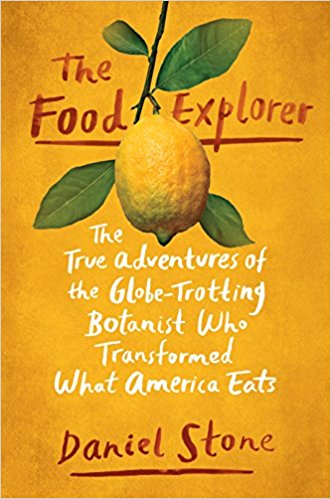
The Food Explorer: The True Adventures of the Globe-Trotting Botanist Who Transformed What America Eats by Daniel Stone (February 20th)

I love globe-trotting botanists! The Food Explorer tells the true adventures of David Fairchild, a late-nineteenth-century food explorer and botanist who traveled the world and introduced plants and crops such as kale from Croatia, mangoes from India, avocados from Chile, pomegranates from Malta, cotton from Egypt, and the cherry blossom tree from Japan, all to America.

Prosecco Made Me Do: 60 Seriously Sparkling Cocktails by Amy Zavatto (April 3rd)

This fun and beautifully illustrated collection of recipes will have you serving up some seriously sparkling cocktails. Also includes purchasing and serving tips and a guide to cordials, syrups, and liqueurs. It would make a really fun gift for the bellini lover in your life.

This post was originally published on Book Riot.
Literary Boston

With literary landmarks, beautiful and historic libraries, and a wealth of bookstores, Boston is every book lover’s dream. Check out this curated list of some of the best literary Boston has to offer.

Courtesy of Boston Public Library / Front of the Boston Public Library

Boston Public Library

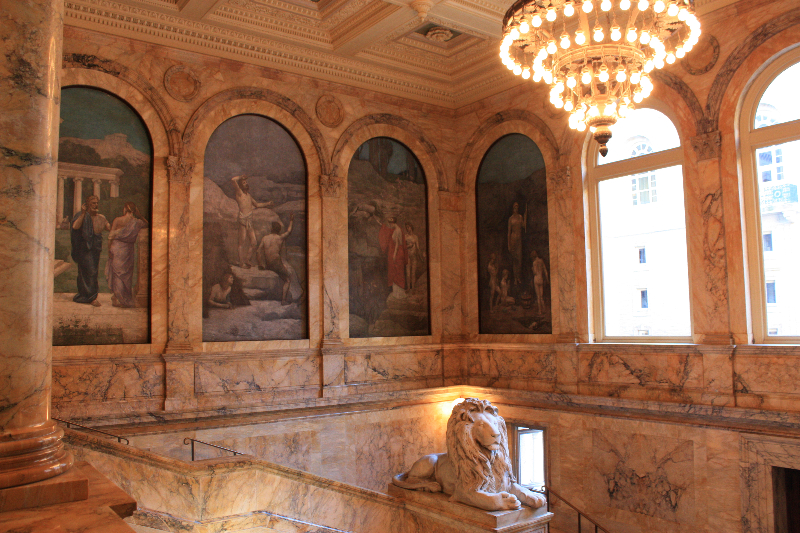
The Boston Public Library’s Central Branch at Copley is one of my favorite places in the city and a can’t miss destination for visitors. Founded in 1848, the Boston Public Library was the first free library in the United States. It’s now home to over 23 million items, including rare books and manuscripts, art, music, and more. With regular exhibitions, musical events, lectures, and book sales it’s got something for everyone and is a true cultural center for the city. Not to mention that the building is breathtaking! Take a stroll through the courtyard and older sections of the McKim building as well as the newly renovated, modern Johnson building. Free art and architecture tours are offered daily.

Courtesy of Boston Public Library / McKim Building Interior

Courtesy of Boston Public Library / Courtyard

Boston Athenaeum

Is one library not enough? The Boston Athenaeum, founded in 1807, is one of the oldest independent libraries in the United States. Its collection today features over half a million volumes, with a particular focus on local Boston history, state, and New England history, as well as its permanent collections of artwork and rotating exhibitions. It’s a beautiful, classical space with columns, busts, and shelves and shelves of books. You have to pay for admission but it’s worth the trip to 10 ½ Beacon Street (I just love that!)

Creative Commons Boston Athenaeum, Boston, Massachusetts by Daderot is licensed under CC BY-SA 3.0 / Boston Athenaeum

Omni Parker House Hotel

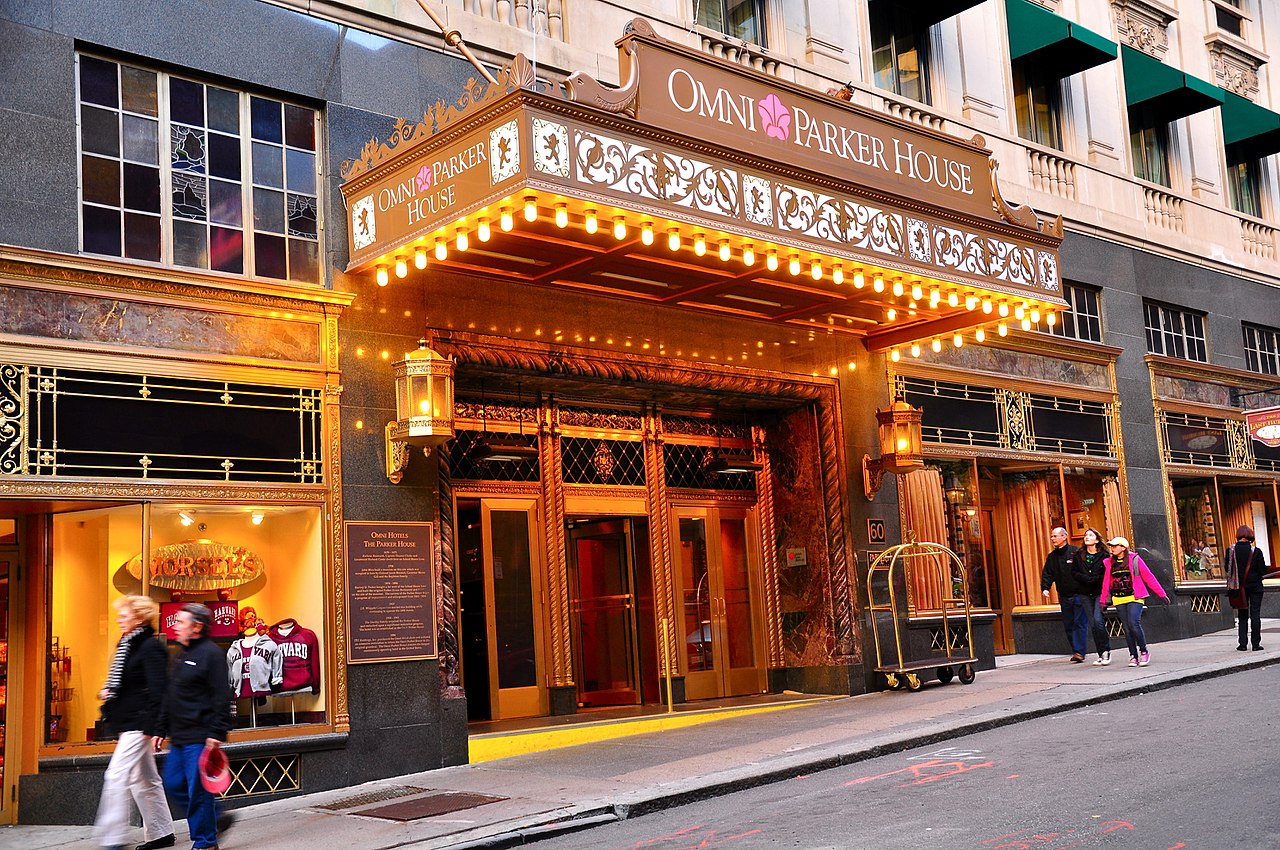
The Omni Parker House Hotel has a long and varied history since its opening in 1855 and that includes some literary greats. The legendary nineteenth-century Saturday Club, an intellectual club that included Emerson, Thoreau, Longfellow, and others, met regularly at the Omni Parker for conversation (and I would assume cocktails). You might also remember the Omni Parker House Hotel from Edith Wharton’s Age of Innocence. It’s not just a landmark though, but a working, gorgeously preserved historic hotel, so take a quick break in the hotel bar or restaurant—supposedly they perfected Boston cream pie here—and enjoy!

Creative Commons Omni Parker House by themightyquill is licensed under CC BY 2.0 / Front of Omni Parker House Hotel

Famous Author Residences and the Boston Literary District

Speaking of famous authors, Boston has been home to so many I can’t even begin to list them all! Some of the highlights include Sylvia Plath and her residence on Willow Street, Kahlil Gibran, the Lebanese-American painter, poet, and author of The Prophet, and his residence and memorial, and Phillis Wheatley, the African-American poet and the Old South Meeting House where she joined the congregation in 1771. Boston has a designated Literary District (that stretches from the Boston Public Library in Copley Square through the Boston Public Garden and Beacon Hill) and the map provided by the Boston Literary District is an especially useful resource to find author residences, literary landmarks, and more!


Bookstores

Boston has a wealth of bookstores, notably independents that serve almost every neighborhood in the greater Boston area. I’ll feature a few here but they are all different and wonderful.

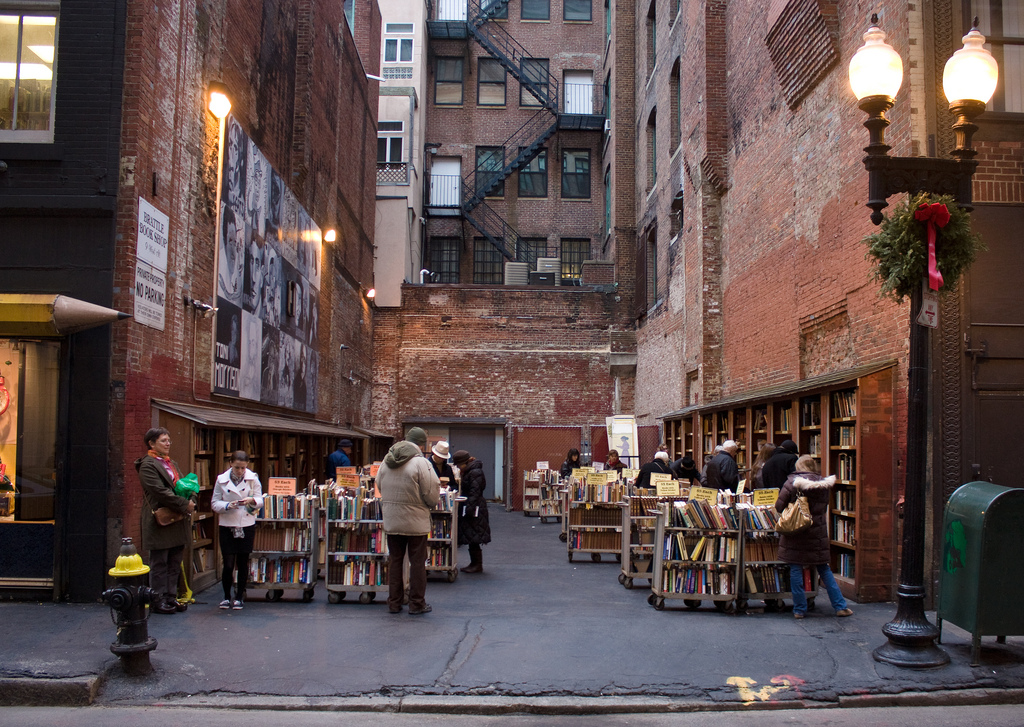
Creative Commons Brattle Book Shop by bill_comstock is licensed under CC BY 2.0 / Brattle Book Shop

Brattle Book Shop and Trident Booksellers and Cafe

Brattle Book Shop and Trident Booksellers are two of the best indies in the downtown area. Brattle Book Shop, located next to the Boston Common, is one of America’s oldest and largest antiquarian book shops. It’s known for its collectible and rare books as well as its photogenic outdoor sale lot (And yes, that is a large pencil!) Trident Booksellers and Cafe is a lovely and inviting space, with a great selection of new books and gifts. And the cafe serves a killer brunch.

Brookline Booksmith

Brookline Booksmith, located in Coolidge Corner, Brookline, just outside of Boston, is an absolutely wonderful and beloved independent bookstore. The selection is diverse and it’s obvious that a lot of love (and work) has gone into the curation of the Booksmith’s collection. Check out the used book cellar, the gift section, and all of the fantastic author events, book clubs, and more!

Harvard Book Store

Harvard Book Store is a locally owned independent located in the heart of Harvard Square in Cambridge. It’s an extensive collection of new, used, and remaindered books, Harvard University merchandise, and gifts. The author event series is award-winning and you shouldn’t miss their print on demand, espresso book machine “Paige M. Gutenborg.” Twice a year they open their warehouse in Somerville for a can’t-miss sale.

Other notables:

Grolier Poetry Book Shop

Newbury Comics

Papercuts J.P.

Porter Square Books

Raven Used Books

Creative Commons Make Way for the Damn Ducklings by theilr is licensed under CC BY-SA 2.0 / Make Ways for Ducklings Sculpture

For the Kids

Visiting Boston with the family? Here are some easy, fun, literary adventures to have with children. If you’re downtown near the Boston Common, visit the Make Way for Ducklings Sculpture located in the Public Garden, a tribute to Robert McCloskey’s Caldecott medal-winning children’s story. It’s beloved by Bostonians and you’ll often find the ducklings dressed up for the season or a special event. You can pick up the book Make Way for Ducklings at most Boston-area bookstores for fun bedtime reading.

Also in the Public Garden is the Trumpet of the Swan Bridge and Swan Boats, named after E.B. White’s The Trumpet of the Swan. This is the spot where Louis, a trumpeter swan born with no voice embraces who he is and plays his trumpet. The swan boats are available to ride in the warmer months but it’s a lovely area to walk through regardless of the season.

The World’s Only Curious George Store

A whimsical book and toy store in Harvard Square all about—you guessed it—Curious George. In addition to books, toys, and merchandise related to Curious George, the store also has a delightful selection of other children’s books and toys.

This post was originally published on Book Riot.