2019 New Releases: In Translation

Last year was an astonishingly good year for literature in translation and after poring over catalogs and press releases I’m thrilled to say that it’s only going to continue in 2019! Newly released books from beloved authors like Roberto Bolaño’s The Spirit of Science Fiction and Clarice Lispector’s The Besieged City need no introduction and are sure to be highlights, but they don’t even scratch the surface. A new nordic crime series from Helene Tursten, returning favorites Samanta Schweblin and Han Kang, and exciting English-language debuts—you’ll have a hard time picking which book to start with. Check out these 2019 new releases in translation!

Mouthful of Birds: Stories by Samanta Schweblin, translated by Megan McDowell 

Samanta Schweblin, author of the literary sensation Fever Dream, returns with her first short story collection translated into English. Like Fever Dream, I was struck by the elusive, almost unsatisfactory nature of the stories. Some are strikingly short. Others are carefully crafted to confound. All leave you wanting more and thinking about them long after. Strange and fantastic, dark and disturbing, the stories in Mouthful of Birds are sure to please fans of Schweblin’s uniquely unsettling style. (January 8, Riverhead Books)

Tentacle by Rita Indiana, translated by Achy Obejas

Tentacle is the queer, punk, dystopian, climate change, science fiction novel from the Dominican Republic you didn’t know you needed in your life. An unforgettable and wild book, Tentacle follows Acilde Figueroa who finds herself “at the heart of a Santería prophecy: only she can travel back in time and save the ocean—and humanity—from disaster. But first she must become the man she always was—with the help of a sacred anemone.” Rita Indiana is a music composer, producer and key figure in contemporary Caribbean literature and the experimental Dominican popular music scene. (January 15, And Other Stories)

All My Goodbyes by Mariana Dimópulos, translated by Alice Whitmore

In striking fragments that shift between time and place, All My Goodbyes follows a young Argentinian woman and her “repeated acts of departure.” She leaves places. She leaves people. Ultimately, she thinks she’s found a home in the southernmost region of Patagonia, a place to stay, but it’s not to be. In the midst of archiving all of her goodbyes, her departures, we also have violent murders that haunt her story from the first page. A propulsive, restless force kept me glued to this novel and I read it in one sitting. (February 5, Transit Books)

Territory of Light by Yuko Tsushima, translated by Geraldine Harcourt

Territory of Light follows a woman starting her life over again with her young daughter after being left by her husband. Her new Tokyo apartment is awash in light but she finds herself falling further into darkness and depression. As time passes, she confronts her new reality and makes plans for the future. It is a painful and honest journey, one that will ring true to many who have had to remake their life in a new image after loss. “At once tender and lacerating, luminous and unsettling, Yuko Tsushima’s Territory of Light is a novel of abandonment, desire, and transformation.” (February 12, Farrar, Straus & Giroux)

The White Book by Han Kang, translated by Deborah Smith

From the Booker-Prize winning author of The Vegetarian and Human Acts, comes the much-anticipated The White Book. While on a writer’s residency, a nameless narrator reckons with the death of her older sister, who died a few hours old and left an inedible mark on the narrator and her family. She writes about this tragedy in a series of unique and profound reflections “through the prism of the color white.” The White Book is a gorgeous and startling meditation on death and grief. (February 19, Hogarth)

Hunting Game by Helene Tursten, translated by Paul Norlen

The first installment in a new series from Helene Tursten, the author of the Irene Huss series and An Elderly Lady Is Up to No Good(which I loved). This new series follows Swedish Detective Inspector Embla Nyström as she’s swept into a murder investigation during her family’s annual moose hunt. Policewoman and prizewinning Nordic welterweight, Embla is a badass. Yes, she’s smart and strong—but also refreshingly complicated and flawed. The surprise in the ending comes not from the identity of the murderer but in Embla’s reaction to the events. And you couldn’t have a better setting for a chilling mystery than the nordic wilderness. (February 26, Soho Crime)

River of Fire by Qurratulain Hyder, translated by the author

Arguably the most important novel of 20th-century Urdu fiction, River of Fire follows the intertwining lives of four characters over two and a half millennia. Qurratulain Hyder weaves together “parables, legends, dreams, diaries, and letters, forming a rich tapestry of history and human emotions and redefining Indian identity.” The Times Literary Supplement describes it as “to Urdu fiction what One Hundred Years of Solitude is to Hispanic literature.” (March 26, New Directions)

Optic Nerve by María Gainza, translated by Thomas Bunstead

María Gainza’s English-language debut, translated by Thomas Bunstead, has been receiving rave reviews—its been called gorgeous, brilliant, and profound—and I can’t wait to get my hands on it. The narrator of Optic Nerve is an Argentinian woman obsessed with art and episodes in art history are woven into descriptions of her life in Buenos Aires. “The effect is of a character refracted by environment, composed by the canvases she studies…It is a book that captures, like no other, the mysterious connections between a work of art and the person who perceives it.” (April 9, Catapult)

Arid Dreams: Stories by Duanwad Pimwana, translated by Mui Poopoksakul

I’d like to dedicate the month of April to Duanwad Pimwana, an important literary figure in contemporary Thai literature, hitting the U.S. literary scene by storm with two new books in April, both translated by Mui Poopoksakul. The first is Bright, published by Two Lines Press, the first-ever novel by a Thai woman to appear in English translation. In the second, Arid Dreams, Pimwana turns her keen eye and sharp wit on modern Thailand, “exploring class, gender, and disenchantment in a changing country.” (April 16, Feminist Press)

Flowers of Mold & Other Stories by Ha Seong-Nan, translated by Janet Hong

“If you’re looking for a book that will make you gasp out loud, you’ve found it.” So says Kirkus Reviews and dozens of other publications and reviewers who can’t stop talking about Flowers of Mold. Unnerving, haunting, captivating—these 10 stories follow ordinary characters going about their lives, yet there’s something disturbing just below the surface. One small crack and everything’s unleashed. “The latest in the trend of brilliant female Korean authors to appear in English, Ha cuts like a surgeon, and even the most mundane objects become menacing and unfamiliar under her scalpel.” (April 23, Open Letter)

Looking for even more? The New York Times Globetrotting feature gathers together a sneak preview of books coming out in 2019 from around the world.

The post was originally published on Book Riot.

Unseen Stieg Larsson Investigation to Be Revealed in New Book

An unseen investigation by Stieg Larsson, the late journalist and author of the Millennium Trilogy, has come to light and will be revealed in a new true crime book. Larsson was a leading expert on antidemocratic, right-wing, extremist organizations. He died in 2004, shortly after delivering the manuscripts for The Girl with the Dragon TattooThe Girl Who Played with Fire, and The Girl Who Kicked the Hornet’s Nest.

On February 28, 1986, Swedish Prime Minister Olof Palme was shot dead in Stockholm. The crime is still unsolved today. It’s now known that Larsson began his own investigation into the assassination—continuing the search until his own death. In 2014, journalist and documentary filmmaker, Jan Stocklassa gained access to the 20 boxes of Larsson’s research into the case.

“In The Man Who Played with Fire: Stieg Larsson and the Hunt for an Assassin, Stocklassa reveals new facts about the case and reveals the hitherto unknown research of the best-selling author in a fascinating true crime story. For the first time in many years, the police in Sweden have taken active measures to investigate a new suspect in the murder case and are pursuing leads based on the research revealed in Stocklassa’s book.”
The Man Who Played with Fire will be published by Amazon Crossing, Amazon’s literature in translation imprint. It will be translated from the original Swedish by Tara F. Chace. The book has a publication date of October 1, 2019.

In the press release announcing the acquisition, Senior Editor Elizabeth DeNoma writes, “Jan Stocklassa’s access to Stieg Larsson’s investigation and his own years-long intrepid, exciting exploration into the suspects, motives, and connections gives readers a true crime story about one of the most gripping unsolved murder mysteries of modern times, investigated by one of the most well-known authors of all time. We can’t wait to share this story with Stieg Larsson’s English-language fans who will be struck by the parallels between the famous author and his famous character, Mikael Blomkvist.”

Stocklassa is also the executive producer of a documentary of the same name that focuses on Larsson’s research into extreme right-wing groups. It premiered at the Sundance Film Festival in January 2019.

This post was originally published on Book Riot.

25 Clarice Lispector Quotes About Life, Art, and More

Clarice Lispector is a legend, known the world over for her dark genius and glamour. She inspires cult-like fervor in her readers. Be inspired by these cutting and brilliant Clarice Lispector quotes on life, art, and more.

“Everything in the world began with a yes. One molecule said yes to another molecule and life was born.” —The Hour of the Star, translated by Benjamin Moser

“The world’s continual breathing is what we hear and call silence.” —The Passion According to G.H., translated by Idra Novey

“Who has not asked himself at some time or other: am I a monster or is this what it means to be a person?” —The Hour of the Star, translated by Benjamin Moser

“You don’t understand music: you hear it. So hear me with your whole body.” —Água Viva, translated by Stefan Tobler

“Do you ever suddenly find it strange to be yourself?” —A Breath of Life, translated by Johnny Lorenz

“So long as I have questions to which there are no answers, I shall go on writing.” —The Hour of the Star, translated by Benjamin Moser

“How was she to tie herself to a man without permitting him to imprison her? How could she prevent him from developing his four walls over her body and soul? And was there a way to have things without those things possessing her?” —Near to the Wild Heart, translated by Alison Entrekin

“I only achieve simplicity with enormous effort” —The Hour of the Star, translated by Benjamin Moser

“I write as if to save somebody’s life. Probably my own. Life is a kind of madness that death makes. Long live the dead because we live in them.” —A Breath of Life, translated by Johnny Lorenz

“Things were somehow so good that they were in danger of becoming very bad because what is fully mature is very close to rotting” —The Hour of the Star, translated by Benjamin Moser

“And I want to be held down. I don’t know what to do with the horrifying freedom that can destroy me.” —The Passion According to G.H., translated by Idra Novey

“Do not mourn the dead. They know what they are doing.” —The Hour of the Star, translated by Benjamin Moser

“No it is not easy to write. It is as hard as breaking rocks. Sparks and splinters fly like shattered steel.” —The Hour of the Star, translated by Benjamin Moser

“Because I dived into the abyss I started to love the abyss of which I am made.” —The Passion According to G.H., translated by Idra Novey

“Living isn’t courage, knowing that you’re living, that’s courage” —The Passion According to G.H., translated by Idra Novey

“I hear the mad song of a little bird and crush butterflies between my fingers.” —Água Viva, translated by Stefan Tobler

“Here is a moment of extravagant beauty: I drink it liquid from the shells of my hands and almost all of it runs sparkling through my fingers: but beauty is like that, it is a fraction of a second, quickness of a flash and then immediately it escapes.” —A Breath of Life, translated by Johnny Lorenz

“Where does music go when it’s not playing?—she asked herself. And disarmed she would answer: May they make a harp out of my nerves when I die.” —Near to the Wild Heart, translated by Alison Entrekin

“I’m afraid to write. It’s so dangerous. Anyone who’s tried, knows. The danger of stirring up hidden things—and the world is not on the surface, it’s hidden in its roots submerged in the depths of the sea. In order to write I must place myself in the void. In this void is where I exist intuitively. But it’s a terribly dangerous void: it’s where I wring out blood. I’m a writer who fears the snare of words: the words I say hide others—which? maybe I’ll say them. Writing is a stone cast down a deep well.” —A Breath of Life, translated by Johnny Lorenz

“Meanwhile, the clouds are white and the sky is blue. Why is there so much God? At the expense of men.” —The Hour of the Star, translated by Benjamin Moser

“Never suffer because you don’t have an opinion on this or that topic. Never suffer because you are not something or because you are.” —Near to the Wild Heart, translated by Alison Entrekin

“At the bottom of everything there is the hallelujah.” —Água Viva, translated by Stefan Tobler

“I’m no more than a comma in life. I who am a colon. Thou, thou art my exclamation.” —A Breath of Life, translated by Johnny Lorenz

“I want the following word: splendor, splendor is fruit in all its succulence, fruit without sadness. I want vast distances. My savage intuition of myself.” —Água Viva, translated by Stefan Tobler

“Sometimes writing a single line is enough to save your own heart.” —A Breath of Life, translated by Johnny Lorenz

Do you have a favorite Clarice Lispector quote that isn’t on the list? Share it in the comments! Looking to read more Clarice Lispector but don’t know where to start? Check out this reading pathway through her books.

This post was originally published on Book Riot.

Women In Translation and the BTBA

After a record-breakingly frigid Thanksgiving here in the northeast, I’m dreaming wistfully of August. BBQs, beaches, and bikinis are all good but I mostly just miss being able to go outside without wrapping multiple scarves around my face. It’s the little things in life! I also miss Women in Translation Month. This past August my social media feed was packed with great book suggestions and conversations and I loved it. But it doesn’t have to be August to read women in translation and I’ve picked out a selection of great titles by women that are eligible for this year’s award.

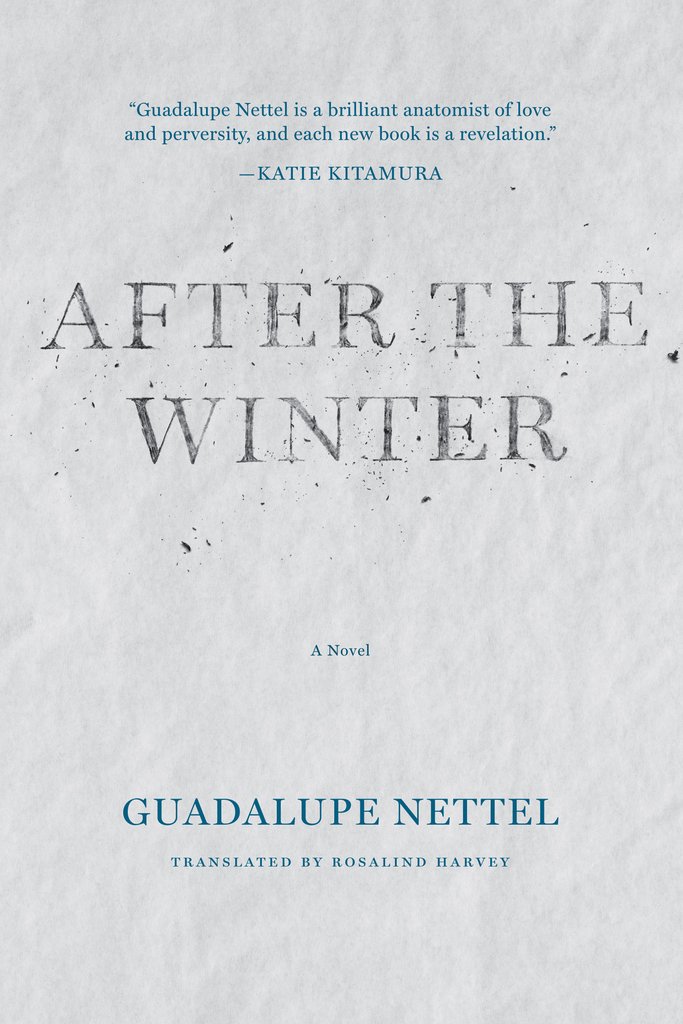
After the Winter by Guadalupe Nettel, translated by Rosalind Harvey 

I took my time with this sharp and stunning novel and I absolutely loved it. In parallel and entwining narratives that move from Havana to Paris to New York City, After the Winter is a novel ultimately about the human impulse to love, and yet it’s unlike any other love story I’ve ever read. The writing, in Rosalind Harvey’s brilliant translation, is nothing short of transcendent—subtle and dark but also surprisingly funny. Going forward, I want all of my love stories to have this many cemeteries in them.

The Governesses by Anne Serre, translated by Mark Hutchinson

In this U.S. debut from major French writer Anne Serre, three governesses are shut off in a remote country home. They’re supposed to be watching their pupils, but in this “intense, delicious meringue of a novel” they’re off instead having frenzied erotic adventures. It’s an absolute gem and I’m not the first judge to gush about it and I’m sure I won’t be the last. Sexy, funny, smart, and some spectacular writing. And all in like 100 pages and I just don’t know how that’s possible. Kirkus calls it “A sensualist, surrealist romp” writing that “each sentence evokes a dream logic both languid and circuitous as the governesses move through a fever of domesticity and sexual abandon.”

An Elderly Lady Is Up to No Good by Helene Tursten, translated by Marlaine Delargy

An Elderly Lady Is Up to No Good is dark, funny, and oh so satisfying. Maud is an 88-year-old Swede who has no scruples about solving life’s problems with some low-key murder. I enjoyed this story collection and am planning to pick up Helene Tursten’s mystery novels. An Elderly Lady is also just such a great package—the title is fun and clever, the needlepoint cover is hilarious, and the small trim size finishes it off perfectly.

People in the Room by Norah Lange, translated by Charlotte Whittle 

Long viewed as Borges’s muse, Norah Lange has been widely overlooked as a writer in her own right. Translated for the first time into English, People in the Room is an intense, haunting, and canon-breaking novel that completely overwhelmed me. A young woman is looking out her window in the midst of a thunderstorm when she catches sight of three women in the house across the street from her. She begins to watch, obsess over, and imagine the secrets and lies of the women in the window. “Lange’s imaginative excesses and almost hallucinatory images make this uncanny exploration of desire, domestic space, voyeurism, and female isolation a twentieth century masterpiece.”

The Taiga Syndrome by Cristina Rivera Garza, translated by Suzanne Jill Levine and Aviva Kana 

I’m a huge fan of The Iliac Crest by Cristina Rivera Garza and translated by Sarah Booker and I couldn’t wait for the upcoming The Taiga Syndrome, Garza’s take on a contemporary Latin American detective novel. The narrative follows an ex-detective as she searches for a missing couple. It’s complicated and genre bending, with nods to fairy tales—Hansel and Gretel and Little Red Riding Hood specifically—and written in a striking style that’s all her own. The dark, unsettling tone really hit the spot for me in the midst of my fall reading. In a starred review, Kirkus calls it “An eerie, slippery gem of a book” and I just love that description.

No list would be complete without a mention of Fox by Dubravka Ugresic and translated by Ellen Elias-Bursać and David Williams. Fox is astonishing. Complicated, intricate, funny, and wicked smart. And I’m crazy about Eventide by Therese Bohman and translated by Marlaine Delargy (if you’re keeping track, that’s two mentions of Delargy in this piece!) This insightful novel is at once cutting and beautiful. The prose, the character Karolina, the reflections on art and love—it’s masterful and devastating. I could go on but I won’t. I have to go outside and it’s going to take a while with these scarves.

Reading Pathways: Clarice Lispector Books

Clarice Lispector is an internationally-acclaimed author widely considered to be Brazil’s greatest modern writer and called the most important Jewish writer since Kafka. She was born in 1920 to a Jewish family in Ukraine and as a result of anti-Semitic violence her family fled to Brazil when she was still an infant. At the age of 23, she burst onto the literary scene with the publication of Near to the Wild Heart.

She is as much legend as she is fact—dark, dazzling, intense, glamorous, “the sphinx of Rio de Janeiro,” “a female Chekhov on the beaches of Guanabara.” She inspires cult-like fervor in her readers. In the introduction to his biography of Lispector, Why This World, Benjamin Moser quotes an anecdote I’ve heard repeated often, “‘Be careful with Clarice,’ a friend told a reader decades ago, using the single name by which she is universally known. ‘It’s not literature. It’s witchcraft.’”

Near to the Wild Heart by Clarice Lispector, translated by Alison Entrekin
Published in 1943, Near to the Wild Heart introduced Brazil to Clarice Lispector, or as one writer called her “Hurricane Clarice.” The book was a sensation, a hit, written by a previously unknown twenty-three-year-old woman who would go on to dazzle the literary world. Near to the Wild Heart—the title taken from a line from Jame Joyce’s A Portrait of the Artist as a Young Man—follows Joanna, the heroine, from her childhood through to the dissolution of her marriage, in this novel of agency. In a series of interior monologues and narrative epiphanies, readers come to understand the wild, fleeting, and strange creature that is Joanna but they also get a glimpse at the raw, unadulterated power of Lispector’s prose. It’s revelatory and a perfect starting off point to explore Lispector’s writing.

The Complete Stories by Clarice Lispector, translated by Katrina Dodson
Gathered from the nine collections published during her lifetime, The Complete Stories captures Clarice Lispector in all of her “darkness and dazzle.” The stories, written during her adolescence all the way up until her death, are inventive and haunting, often about women at various stages of their lives. Some are more traditional than the novels she’s come to be known for but as a whole the collection is a great way to “get” (or grasp at, at least) a sense of Lispector and her prose. You can dip in and out of these stories—86 in the hardcover and 89 in the paperback with three newly discovered stories—but I would recommend picking them up early in your reading of Lispector.

The Hour of the Star by Clarice Lispector, translated by Benjamin Moser
Clarice Lispector’s last novel is a short, strange, tour de force—a masterpiece of a book. In The Hour of the Star, Lispector follows the narrator Rodrigo S.M., a pretentious, cosmopolitan writer describing the act of writing. He is writing about his creation, Macabéa, one of “life’s unfortunates” a woman living in the slums of Rio. She is poor, sickly, and unloved, and yet she lives simply and happily. “Lispector employs her pathetic heroine against her urbane, empty narrator—edge of despair to edge of despair—and working them like a pair of scissors, she cuts away the reader’s preconceived notions about poverty, identity, love, and the art of fiction.”

A Breath of Life by Clarice Lispector, translated by Johnny Lorenz
If you enjoyed The Hour of the Star but want even more discussion and Lispector brilliance about the theme of creation, A Breath of Life is your perfect next step. Published after her death, A Breath of Life is a dialogue between an author (thinly disguised as Lispector) and his creation, Angela. She is sparklingly alive—speaking, breathing, and dying. Their back and forth is dazzling but also desperate and difficult. Lispector is dying during the writing of this novel and her mind often turns around thoughts of death. “The work’s almost occult appeal arises from the perception that if Angela dies, Clarice will have to die as well. And she did.”

The Passion According to G.H. by Clarice Lispector, translated by Idra Novey
Published in 1964, The Passion According to G.H. is Lispector’s great mystical novel. In The Passion, Lispector follows G.H., a high class Rio sculptress, who enters her maid’s empty room, sees a cockroach and panicking, slams the door and crushes it. She watches the cockroach die over the course of the book and “at the end of the novel, at the height of a spiritual crisis, comes the most famous and most genuinely shocking scene in Brazilian literature.” It’s a brilliant and hypnotic book—there’s little in the way of plot but G.H.’s inner monologue, her stream of consciousness, is utterly amazing. And the ending, which is challenging and unsettling, left me absolutely speechless. It’s a powerful novel, one that I’d recommend as a fitting end to a reading pathway.

If You Want Even More . . . 

Água Viva by Clarice Lispector, translated by Stefan Tobler
I can almost guarantee that you’ve never read anything like Água Viva. It’s “Lispector at her most philosophically radical” and that’s really saying something when it comes to Lispector. Plotless and essentially characterless, Água Viva is a prolonged meditation on the nature of life, time, and creation. As challenging as it might sound, it’s profound and immensely rewarding. “Epiphanies are delivered one after the other in a book-length relay, a final and magnificent apotheosis of Lispectorisms. I could quote every line and still not do the book justice.”—Rachel Kushner in Bookforum

The Chandelier by Clarice Lispector, translated by Benjmain Moser and Magdalena Edwards
The Chandelier is Clarice Lispector’s second novel—now translated many years later and published for the first time in English. It was hotly anticipated by devoted Lispector fans (myself included.) It’s an intense and interior novel following the story of one woman’s life as she seeks freedom and meaning, but it’s also so much more than that. Benjamin Moser, her biographer, writes that it “stands out in a strange and difficult body of work, as perhaps her strangest and most difficult book.” The writing is powerful and strange, fluid and crushing. I’d recommend it particularly to fans of Lispector who have read a lot of her work and who want to trace the trajectory of her early work to her later masterpieces, like The Passion According to G.H.

In the introduction to The Complete Stories, Benjamin Moser writes, “Hers is an art that makes us want to know the woman; she is a woman that makes us want to know her art.” If you find yourself (as I did) wanting to know more about Lispector herself I recommend Why This World: A Biography of Clarice Lispector.

This post was originally published on Book Riot.

Fall 2018 New Releases in Translation

Fall is usually a bonanza for new releases and this one is no exception. New books from fan favorites Murakami, Rodoreda, and Knausgaard; thrilling English debuts; and more—you can’t go wrong with a season stacked like this. Check out these fall 2018 new releases in translation.

After the Winter by Guadalupe Nettel, translated by Rosalind Harvey  

This captivating new novel from must-watch author Guadalupe Nettel is one of the buzziest books of the fall and I can’t wait to get my hands on it—luckily it’s one of the first new releases of September! “In parallel and entwining stories that move from Havana to Paris to New York City, no routine, no argument for the pleasures of solitude, can withstand our most human drive to find ourselves in another, and fall in love. And no depth of emotion can protect us from love’s inevitable loss.” It looks utterly brilliant. (September 4th, Coffee House Press)

My Struggle: Book Six by Karl Ove Knausgaard, translated by Don Bartlett and Martin Aitken 

The final book in the long awaited, internationally acclaimed My Struggle series. The series as a whole, and in particular this final volume, is an astonishing and “engrossing look into the mind of one of the most groundbreaking artists of our time.” And for the first time, Knausgaard confronts and discusses the title of his series, Mein Kampf, and Hitler. Publishers Weekly writes, “The final book of Knausgaard’s six-volume masterpiece goes maximalist and metatextual, examining the impact that the autobiographical series has had on the author’s life and the lives of those around him…the rationale for his project comes into brilliant focus.” (September 18th, Archipelago)

Killing Commendatore by Haruki Murakami, translated by Philip Gabriel and Ted Goossen 

Prepare yourself, Murakami fans—there’s another one coming! After his wife abandons him, a portrait painter in Tokyo finds himself in the mountain home of a famous artist. He discovers a previously unknown painting in the attic that begins a very Murakami-esque adventure, reminiscent of The Wind-Up Bird Chronicle. “A tour de force of love and loneliness, war and art—as well as a loving homage to The Great GatsbyKilling Commendatore is a stunning work of imagination from one of our greatest writers.” (October 9th, Knopf)

The Governesses by Anne Serre, translated by Mark Hutchinson

In this U.S. debut from major French writer Anne Serre, three governesses shut off in a remote country home are preparing a party for their young pupils. Well, they’re supposed to be, at least, but in this “intense, delicious meringue of a novel” they’re off instead having frenzied erotic adventures. Kirkus calls it “A sensualist, surrealist romp” writing that “each sentence evokes a dream logic both languid and circuitous as the governesses move through a fever of domesticity and sexual abandon.” (October 30th, New Directions)

Camellia Street by Mercè Rodoreda, translated by David Rosenthal 

Mercè Rodoreda is widely regarded as the most important Catalan writer of the 20th century. I’m just starting to read through her extensive list and I’m thrilled to see a new release this fall from Open Letter. Published in 1966, Camellia Street is arguably one of the starkest, but also one of the most important of Rodoreda’s works. It chronicles the life of a prostitute in war-torn Barcelona of the 1940s and ’50s. “Episodic in style, [Rodoreda’s] language is breathtaking and transportive, ultimately showing the reader the universal beauty and injustice of fate…An incredibly original work and not to be missed.” —Mark Haber, Brazos Bookstore (November 20th, Open Letter Books)

The Taiga Syndrome by Cristina Rivera Garza, translated by Suzanne Jill Levine and Aviva Kana

I’m a huge fan of The Iliac Crest by Cristina Rivera Garza and translated by Sarah Booker and I can’t wait for the upcoming The Taiga Syndrome, Garza’s take on a contemporary Latin American detective novel. The narrative follows an ex-detective as she searches for a missing couple. It’s complicated and genre bending, with nods to fairy tales—Hansel and Gretel and Little Red Riding Hood specifically—and written in a striking style that’s all her own. In a starred review, Kirkus writes: “Like the best speculative fiction, it follows the sinuous paths of its own logic but gives the reader plenty of room to play. Fans of fairy tales and detective stories, Kathryn Davis and Idra Novey, will all find something to love. An eerie, slippery gem of a book.” (October 1st, Dorothy)

CoDex 1962: A Trilogy by Sjón, translated by Victoria Cribb

Twenty years in the making, CoDex 1962 is the great modern epic you didn’t know you were missing out on. Sjón’s great trilogy is now complete and available in English in this collected edition. The trilogy begins at a German inn during WWII where a Jewish fugitive and his lover, a maid at the inn, form a baby from a piece of clay. The fugitive arrives in Iceland with his clay son and becomes involved in a murder mystery. The final book intertwines that story with a very modern tale of genetics and biotech set in Reykjavík. “In CoDex 1962, Sjón has woven ancient and modern material and folklore and cosmic myths into a singular masterpiece—encompassing genre fiction, theology, expressionist film, comic strips, Fortean studies, genetics, and, of course, the rich tradition of Icelandic storytelling.” (September 11th, FSG)

One Part Woman by Perumal Marugan, translated by Aniruddhan Vasudevan

Selling over 100,000 copies in India, One Part Woman is the U.S. debut of bestselling author Perumal Marugan. I’m thrilled to read this thoughtful book—it’s a cultural phenomenon in India and jump started conversations about caste, family expectations, and female empowerment. Set in South India during the British colonial period, One Part Woman tells the story of a couple trying to conceive and the efforts they make to have a baby and please their family. (October 9th, Grove Press/Black Cat)

This post was originally published on Book Riot.

Announcing the 2018 National Book Awards Translated Literature Longlist

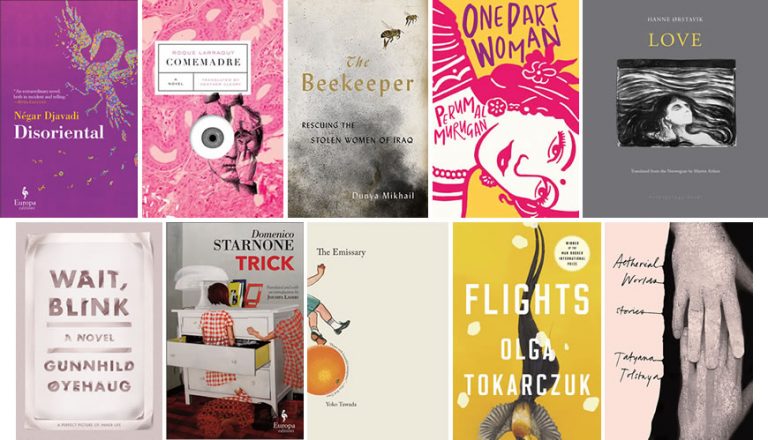
The National Book Foundation announced the 2018 National Book Awards Translated Literature longlist. It is the first time this award in its current iteration will be given (there was a previous translation award years ago). This prize, which represents a permanent fifth National Book Award category, was announced earlier this year and will honor a work of fiction or nonfiction that has been translated into English and published in the U.S.

Disoriental by Négar Djavadi, translated by Tina Kover

Comemadre by Roque Larraquy, translated by Heather Cleary

The Beekeeper: Rescuing the Stolen Women of Iraq by Dunya Mikhail, translated by Max Weiss and Dunya Mikhail

One Part Woman by Perumal Murugan, translated by Aniruddhan Vasudevan

Love by Hanne Ørstavik, translated by Martin Aitken

Wait, Blink: A Perfect Picture of Inner Life by Gunnhild Øyehaug, translated by Kari Dickson

Trick by Domenico Starnone, translated by Jhumpa Lahiri

The Emissary by Yoko Tawada, translated by Margaret Mitsutani

Flights by Olga Tokarczuk, translated by Jennifer Croft

Aetherial Worlds by Tatyana Tolstaya, translated by Anya Migdal

The shortlist will be announced October 10th. The 69th National Book Awards Ceremony will be held at Cipriani Wall Street in New York City on Wednesday, November 14, and will also be live-streamed online in its entirety. The $10,000 prize will be split evenly between the winning author and translator.

“The judges for the category this year are Harold Augenbraum, the acting editor of The Yale Review and the former executive director of the National Book Foundation; Karen Maeda Allman, the author-events co-coordinator at the Elliott Bay Book Company, in Seattle; Sinan Antoon, a poet, novelist, and translator; Susan Bernofsky, who directs the literary translation program at the Columbia University School of the Arts, and Álvaro Enrigue, whose most recent novel is Sudden Death.”

Are any of your favorite books in translation on this list? Are there any you think are missing?

This post was originally published on Book Riot.

The End of Summer

Well, August is over and summer is coming to a close. This August was the most exciting Women in Translation Month yet and I wanted to share one of my favorite reads of the month: The Summer Book by Tove Jansson, translated by Thomas Teal. In The Summer Book, celebrated artist and author Tove Jansson “distills the essence of the summer—its sunlight and storms—into twenty-two crystalline vignettes.” The vignettes follow six-year-old Sophia and her grandmother and their adventures on a remote island in the gulf of Finland. This is my first time reading what many consider a modern classic and I couldn’t agree more—The Summer Book is utterly perfect. It’s quiet and subtle, warm and wise, but with one single striking and devastating sentence Jansson changes your reading and understanding of the whole book.  I read it on my vacation on Cape Cod and it was such a special reading experience.

But you should read Women in Translation all year long! I wrote up this list of 50 Must-Read Books by Women in Translation on Book Riot—give it a look! 

Recommended Reads for Women in Translation Month!

August is Women in Translation Month! Roughly 30% of books published in English translation are written by women, according to numbers pulled from the translation database begun by Three Percent and Open Letter and now hosted by Publishers Weekly. Founded by literary blogger Meytal Radzinski, Women in Translation Month was started to promote women writers from around the world and combat this dreadfully low statistic. Looking for books to start your #WITMonth reading? Here are some amazing books I’m reading this August.

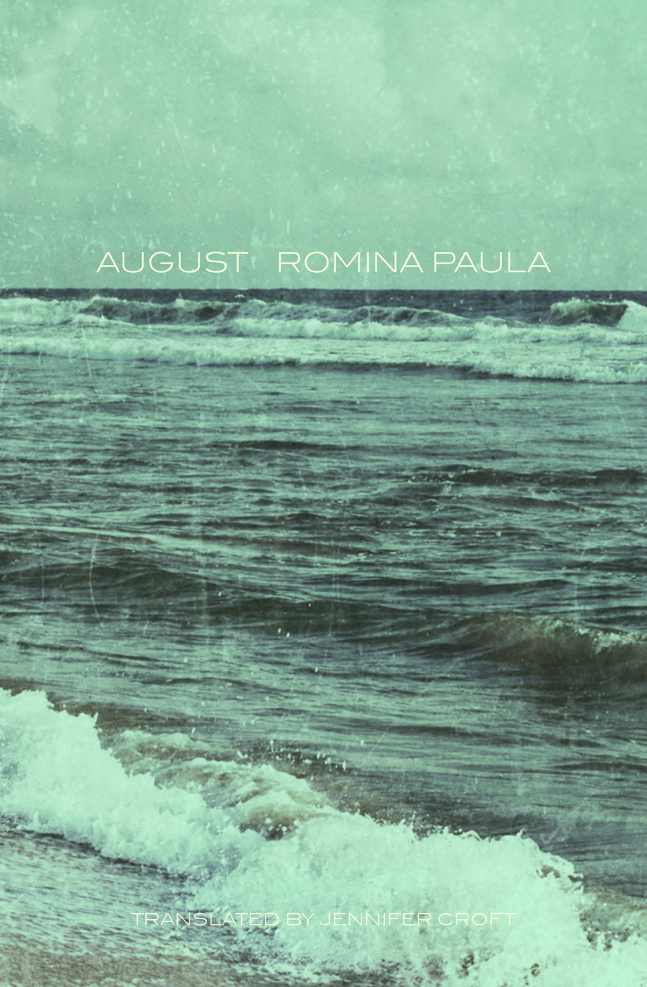
August by Romina Paula, translated by Jennifer Croft

A raw, heartrending novel of grief, loss, and returning home. A young woman, Emilia, returns to her rural hometown in Patagonia to scatter the ashes of her best friend who died by suicide five years earlier. Written as if to her best friend, August is a nostalgic, complicated, and poignant confessional. Emilia is baring her soul—but for any reader who has also left home, she feels dangerously close to baring ours too. Kirkus Reviews describes it: “Paula’s English-language debut is almost impossible to put down: moody, atmospheric, at times cinematic, her novel is indicative of a fresh and fiery talent with, hopefully, more to come.”


Bride and Groom by Alisa Ganieva, translated by Carol Apollonio

From an exciting new voice in modern Russian literature, Bride and Groom is a complex and layered love story about two young people living in Dagestan. Alisa Ganieva’s English debut The Mountain and the Wall was met with stunning praise and excitement and Bride and Groom continues the trend. While exploring themes of love and fate, familial and cultural expectations, and the sway of tradition, Bride and Groom also deals directly with Dagestan’s “internal conflicts with Islamic radicalization in the aftermath of its Soviet past.” That all might sound a little heavy for a love story, but Ganieva’s writing is always surprising—witty, folkloric, thoughtful, compelling—and I can’t recommend Bride and Groom enough.


Suzanne by Anaïs Barbeau-Lavalette, translated by Rhonda Mullins

Winner of the Prix du libraires du Québec, Suzanne is a fictionalized account of the life of the author’s maternal grandmother. Author and director Anaïs Barbeau-Lavalette never knew her mother’s mother, a painter and poet who abandoned her husband and young family and was associated with Les Automatistes, a movement of dissident artists. She hired a private detective to piece together Suzanne’s life—and what a life it was! “From Montreal to New York to Brussels, from lover to lover, through an abortion, alcoholism, Buddhism, and an asylum. It takes readers through the Great Depression, Québec’s Quiet Revolution, women’s liberation, and the American civil rights movement, offering a portrait of a volatile, fascinating woman on the margins of history.” I’m just starting Suzanne and it’s a beautifully written and striking examination of artistry, motherhood, and family.


The Great Passage by Shion Mura, translated by Juliet Winters Carpenter

Delightfully charming and thoughtful, this novel from award-winning Japanese author Shion Miura is the perfect feel-good read for lovers of language. Kohei Araki believes that “a dictionary is a boat to carry us across the sea of words” and he has been lovingly crafting dictionaries for thirty-seven years. But it’s time to retire and find his replacement—enter Mitsuya Majime, a young and eccentric book lover. Majime sets off on his new task and along the way he learns about words like lovefriendship, and passion. With shifts in narrative and asides that focus on the meaning of particular words, The Great Passage is a stylistically interesting and endlessly sweet novel.

This post was originally published on Book Riot.