Review: The Neapolitan Novels by Elena Ferrante

ferrante

Review: The Neapolitan Novels by Elena Ferrante

My life these past two weeks has been consumed by Elena Ferrante’s Neapolitan novels, which, like the character Lila, have proven to be “terrible, dazzling.” This deep and captivating portrayal of two women’s friendship is set against the poverty and violence of their village and the political turmoil in Italy. I was struck by these women, Elena and Lila, and their ambitions and intense relationships with language, reading, and learning, viewing education as the ultimate escape from their lives.

It’s nearly impossible to describe Ferrante’s writing, impeccably translated from the Italian by Ann Goldstein, but it seems unique in contemporary Italian literature. It’s not flowery, but sparse implies some lack of power and feeling that could never be attributed to Ferrante.

And Ferrante herself is a small piece of the allure of her novels, as she writes anonymously. I don’t have the intense desire to know her that I see in the book world but I also strongly agree with her sentiments published in The New Yorker here.

I believe that books, once they are written, have no need of their authors. If they have something to say, they will sooner or later find readers; if not, they won’t. . . . I very much love those mysterious volumes, both ancient and modern, that have no definite author but have had and continue to have an intense life of their own. They seem to me a sort of nighttime miracle, like the gifts of the Befana, which I waited for as a child. . . . True miracles are the ones whose makers will never be known. . . . Besides, isn’t it true that promotion is expensive? I will be the least expensive author of the publishing house. I’ll spare you even my presence.

The Story of the Lost Child, the last and final book in the series, comes out September 1st! 

NY Times Book Review of Lies, First Person

Lies_First_Person-front_web_large

Boris Fishman starts his review on the NY Times asking:

“Why are so many of our novels so good-mannered these days? Where is Ignatius J. Reilly’s cackle, the self-thwarting abdication of Graham Greene’s comedians, the fear and loathing of Dostoyevsky’s underground man? Where are the lunatics, madmen, misfits and misanthropes, the perfectly good people cracking up and squandering it all to nourish some sweet, unsubtle hatred? With so much enmity in our world, why is there so little in modern American fiction? Is there a liberal bias in books, too?”

Read the review here


Lies, First Person Update

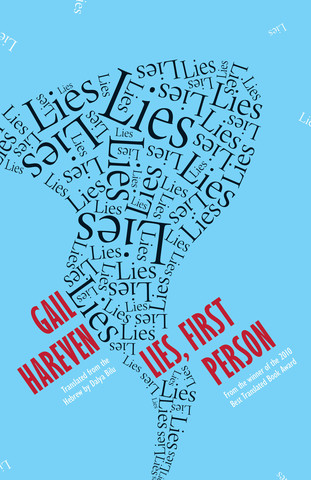
Lies_First_Person-front_web_large

It was two years ago that I advocated for Lies, First Person at Open Letter. And here it is in print! In anticipation of its February publication date I’ll be buying and re-reading Hareven’s first work The Confessions of Noa Weber. I can’t talk this book up any more! See more at Lies, First Person

From the 2010 winner of the Best Translated Book Award comes a harrowing, controversial novel about a woman’s revenge, Jewish identity, and how to talk about Adolf Hitler in today’s world.

Elinor’s comfortable life—popular newspaper column, stable marriage, well-adjusted kids—is totally upended when she finds out that her estranged uncle is coming to Jerusalem to give a speech asking forgiveness for his decades-old book, Hitler, First Person. A shocking novel that galvanized the Jewish diaspora, Hitler, First Person was Aaron Gotthilf’s attempt to understand—and explain—what it would have been like to be Hitler. As if that wasn’t disturbing enough, while writing this controversial novel, Gotthilf stayed in Elinor’s parent’s house and sexually assaulted her “slow” sister.

In the time leading up to Gotthilf’s visit, Elinor will relive the reprehensible events of that time so long ago, over and over, compulsively, while building up the courage—and plan—to avenge her sister in the most conclusive way possible: by murdering Gotthilf, her own personal Hilter. Along the way, Gail Hareven uses an obsessive, circular writing style to raise questions about Elinor’s own mental state. Is it possible that Elinor is following in her uncle’s writerly footpaths, using a first-person narrative to manipulate the reader into forgiving a horrific crime?

Why Indie Non-Profits?

On my first day of orientation at Emerson College for my Masters in Publishing I was asked to turn to a person sitting next to me and tell them what I wanted to do with my life. I was expected to spill (in a succinct manner) all of my publishing goals and ambitions to a stranger. Lucky for me, I met Amanda Diehl, a blogger for Smart Bitches, Trashy Books, Book Riot and all around publishing inspiration (her blog is here: Diary of a Young Semi-Professional ) and to my surprise I had an answer for her. I wanted to work with international literature. Literature in translation. I wanted to be constantly challenged and inspired by deserving and unique literature. I wanted to work with the kinds of presses that do this work. And that means indies and even more specifically it usually means non-profits.

In an industry where most entry-level devotees and interns are looking for the New York City publishing scene, a job at a Big Five press, and the next Hemingway of Fitzgerald to fit into their back pocket I had decided to do the complete opposite. Mainly, because that publishing industry scenario is hardly the norm (actually, it’s bullshit) and because doesn’t working with foreign offices, translators, and presses like Open Letter, New Directions, and Beacon Press sound way more exciting?

I would also argue that these presses do fundamentally important work, The promotion of unique, thought provoking literature, whether it’s international, translated or not, encourages our society to think outside of the narrow spaces brought to us by mainstream media and contemporary popular literature. Indie presses, non-profit presses, they do just that.

They bring something different to the page. 

I couldn’t say it better than this and I encourage anyone that’s interested to read the full article “I Want You To Start Your Own Publishing House.” I haven’t been able to get it out of my head.

There is a real value today in treating readers not merely as consumers but as agents of cultural change, who now have the chance to become deeply invested in your publishing mission as a business as well as a philosophical enterprise. It is in the best interest of every independent publisher to cultivate an engaged readership that will make a lasting impact on our culture in the long run.”

~Will Evans