
Women in Translation

Every season I pour over the catalogs and galleys of new releases in translation and highlight some of the titles that I’m excited about for Book Riot. I was especially impressed with this spring and summer’s incredible offerings of literature translated from Korean. There were even more stunning titles than usual and much more than I could fit into my original list, where I try to highlight a wide diversity of languages and countries. So I was inspired to create a list solely of the titles translated from Korean this season as an added bonus. And because I couldn’t help myself, I also looked ahead at and included some exciting early fall titles.
Looking at this list, I’m overwhelmed by the overall quality of all of these titles — to put it simply, every single one of them is a banger. I’ve always loved Korean literature in translation, but to have more titles available than ever before, written and translated at this high standard, feels like an absolute gift. I’m also impressed by the variety of what’s currently being translated from Korean right now. There are critically acclaimed and beloved authors and translators returning with their newest book, like my most-anticipated book of the season: Phantom Pain Wings by Kim Hyesoon and translated by Don Mee Choi, alongside exceptional English-language debuts like Walking Practice by Dolki Min and translated by Victoria Caudle and Whale by Cheon Myeong-kwan and translated by Chi-Young Kim. There’s also a fascinating mixture of form and genre, from science fiction to literary fiction and novels, short stories, and poetry alike. It’s a thrilling time to be a lover of Korean literature in translation!
Walking Practice by Dolki Min, translated by Victoria Caudle
Walking Practice was my biggest surprise of the season! The novel follows a shapeshifting alien that is the lone survivor of their planet’s destruction, now confined to Earth’s atmosphere. To survive, they learn to use dating apps and their shapeshifting abilities to seduce and eat their suitors. The alien’s inner commentary—horrifying and strange and yet also thoughtful and endearing—about what it means to be an outsider, acting as “human,” and their desire to belong is utterly fascinating and a biting critique of social structures that discriminate against queer, gender-nonconforming, and disabled people. Victoria Caudle’s translation was striking, both insightful and utterly original, and I was grateful for her translator’s note that provided a glimpse behind the curtain. Blending humor and horror, science fiction and searing cultural commentary, Walking Practice stuns—almost as if I was its next victim.
I Went to See My Father by Kyung-Sook Shin, translated by Anton Hur
I Went to See My Father follows the life of a woman reconnecting with her elderly father after the death of her own daughter. While taking care of him, she finds a chest of letters and begins to piece together stories of a life she never knew. It is a powerful and haunting novel about family, war, loss, and fatherhood. While Kyung-Sook Shin is widely known internationally for the international bestseller and winner of the Man Asian Literary Prize Please Look After Mom, translated by Chi-Young Kim, I also recommend The Girl Who Wrote Loneliness, translated by Ha-yun Jung, a haunting coming-of-age story set against the backdrop of Korea’s industrial sweatshops of the 1970s, and The Court Dancer, translated by Anton Hur, a beautifully written historical novel set during the dramatic final years of the Joseon Dynasty.
Greek Lessons by Han Kang, translated by Deborah Smith and Emily Yae Won
I love Han Kang’s sharp and stunning novels, including the Man Booker International Prize winner The Vegetarian, Human Acts, and The White Book, all translated by Deborah Smith, and was eagerly anticipating this new book. Of her past novels, Greek Lessons, translated by Smith and Emily Yae Won, seems to most closely resemble The White Book—a novel that uses an exploration of the color white to think about grief and loss. Likewise, Greek Lessons is a meditation on human connection told through the act of learning and sharing language, specifically Ancient Greek. It’s a pleasure to watch Kang think in this radiant translation.
Whale by Cheon Myeong-kwan, translated by Chi-Young Kim
Shortlisted for the International Booker Prize, Whale is the English-language debut of Cheon Myeong-kwan, an award-winning South Korean novelist and screenwriter, and translated by Chi-Young Kim, who received the Man Asian Literary Prize for her translation of Please Look After Mom by Kyung-Sook Shin. It is a multigenerational story of three women set in a remote, coastal village in the rapidly modernizing South Korea of the latter half of the 20th century. Whale is widely considered a modern classic in South Korea and has been compared frequently to One Hundred Years of Solitude by Gabriel García Márquez with its mix of magical and realist elements and its epic scale, but Whale is its own creature entirely—a strange and beguiling blend of satire, folklore, Korean Han, and something else that feels indescribable.
Phantom Pain Wings by Kim Hyesoon, translated by Don Mee Choi
When I first wrote about Autobiography of Death by Kim Hyesoon and translated by Don Mee Choi, I said that it felt like one of the most important books I’ve ever read. I still feel that way, and my estimation of this author and translator continues to grow with this new collection that also grapples with death, memory, and trauma but is even more deeply personal. Kim Hyesoon writes, “I came to write Phantom Pain Wings after Daddy passed away. I called out for birds endlessly. I wanted to become a translator of bird language.” Like its predecessor, one of the best parts of this collection is watching Hyesoon and Don Mee Choi’s fiercely intelligent minds at work, and I’m grateful for the inclusion of Hyesoon’s profound essay “Bird Rider” and Don Mee Choi’s translator’s diary.
Counterweight by Djuna, translated by Anton Hur
Djuna is a novelist and film critic, widely considered to be one of South Korea’s most important science fiction writers. They have also published their books anonymously for more than 20 years. This is their first novel to be translated into English—and they couldn’t be in better hands than with acclaimed translator Anton Hur—and when I heard that Djuna had conceived of this work as a “low-budget science fiction film” I was immediately intrigued. Within the first few pages, I knew I was already deeply enmeshed in something special. This novel is dizzying and cinematic with corporate politics, family dynamics, an elevator into space, neuro-implant “worms,” an island nation’s fight against a colonial/capitalist takeover, and so much more.
At Night He Lifts Weights: Stories by Kang Young-sook, translated by Janet Hong
Kang Young-sook is an award-winning author of many novels and short story collections and currently teaches creative writing at Korea National University of Arts. This short story collection is her first to be translated into English, by none other than the brilliant Janet Hong. I’m a great admirer of Hong’s translations of the short stories of Ha Seong-Nan and numerous graphic novels by Keum Suk Gendry-Kim, Yeong-Shin Ma, and Ancco, among others. Perceptive and subversive, the stories in At Night He Lifts Weights vary in tone and genre, but each is singularly captivating, swirling around themes of loss—ecological destruction, loneliness, and death. Each has a subtle illusion of calm that conceals what lies below in the unnerving depths.
The Owl Cries by Hye-young Pyun, translated by Sora Kim-Russell
In this intense, psychological thriller, park ranger In-su Park decides to search for a missing man in the woods after a series of bizarre incidents, including discovering a mysterious note left on his desk that says, “The owl lives in the forest.” Just like in their Shirley Jackson Award–winning The Hole, Hye-Young Pyun and translator Sora Kim-Russell create a fast-paced and all-consuming story with an unusual narrator. In-su Park searches desperately for the missing man while also discovering more than he’d like in the forest, the people around him, and in himself. A novel of secrets, isolation, and pain, The Owl Cries is another tightly executed feat of writing.
This post was originally published on Book Riot.

The days are getting longer and spring is in the air. Admittedly with such a strange and unsatisfying New England winter, I have been yearning for spring for a while, so it’s a relief to finally have the weather changing and the flowers coming up. And of course there are the spring 2023 new releases in translation to look forward to! I have pored over the catalogs and galleys and highlighted some of the best spring 2023 new releases in translation, and because there is just so much to choose from, I’ve added notes for others you should seek out as well! There’s something for everyone this season, with exciting debuts, thoughtful nonfiction, stunning poetry collections, and so much more.
Readers will be particularly excited to see new titles from favorite authors like Annie Ernaux, Kim Hyesoon, and Mariana Enriquez and translators like Don Mee Choi and Megan McDowell. But I’ve included some authors new to English-language audiences as well. It seems like every year the new titles in translation become more diverse and wide-ranging, especially when it comes to country of origin and language, and it’s a joy—and increasingly a challenge—to pick from them.
On A Woman’s Madness by Astrid Roemer, translated by Lucy Scott
Published in 1982, On A Woman’s Madness is widely considered a classic of Black, queer, and feminist literature, so it is a joy to finally see it available in English in all of its power. Astrid Roemer is the first writer from Suriname to win the prestigious Dutch Literature Prize. Her propulsive novel follows Noenka, a young Black woman, after she leaves her abusive husband and moves to the capital city of Paramaribo. Roemer is ultimately interested in the question “For a woman in post-colonial Suriname, is it possible to be happy?” and she follows Noenka as she is buffeted by societal expectations and constraints alongside the the legacies of slavery and colonialism. Translator Lucy Scott brings the novel’s language to life in prose that is as lush as the jungle creeping in at the edges of the novel, as captivating as the orchids that infuse it. It is an audacious novel—as reckless and restless as its heroine strives to be.
And don’t miss The Red Book of Farewells by Pirkko Saisio, translated by Mia Spangenberg.
Happy Stories, Mostly by Norman Erikson Pasaribu, translated by Tiffany Tsao
“Hampir, the Indonesian for almost, only a letter away from vampir—the bloodsucking demon. What does it mean to be happy? Also, what does it mean to be almost happy? . . . So, in a world where we celebrate disneyified heterosexualities, for queer folks what is happiness? Often, it becomes the bloodsucking demon, the vampir, the hampir.” I’ve been eagerly anticipating this collection since it was longlisted for the International Booker Prize, and now its finally coming out in the U.S. Norman Erikson Pasaribu is a queer Indonesian Toba Batak writer, and in their debut short story collection they ask what it means to be almost happy, exploring loneliness and melancholy. The emotions the stories brought out in me often caught in my throat, tearing me between sadness and the collection’s clever use of humor—the phrase “laughing to keep from crying” comes to mind. The stories and the thoughtful conversation between the author and translator included in the book have me longing for more from this pair.
And don’t miss Human Sacrifices by María Fernanda Ampuero, translated by Frances Riddle.
The Book of Eve by Carmen Boullosa, translated by Samantha Schnee
I adored The Book of Anna, a strikingly original and feminist sequel to Anna Karenina, by the great Carmen Boullosa—poet, novelist, playwright, essayist, and artist—and translator Samantha Schnee, founding editor of Words Without Borders. So I was thrilled to see another remix by this brilliant team. Like in The Book of Anna, Boullosa cleverly subverts a story so many of us know to give Eve not only a voice but a sexual awakening. She dismantles much of the patriarchal foundation of the Book of Genesis, like the idea of Eve being created from Adam and Eve as the seduced and seducer in the garden of Eden, and instead writes daringly of a brave and curious woman bursting to life.
And don’t miss Sweet Undoings by Yanick Lahens, translated by Kaiama L. Glover.
Phantom Pain Wings by Kim Hyesoon, translated by Don Mee Choi
When I first wrote about Autobiography of Death by Kim Hyesoon and translated by Don Mee Choi, I said that it felt like one of the most important books I’ve ever read. I still feel that way, and my estimation of this author and translator continues to grow with this new collection that also grapples with death, memory, and trauma but is even more deeply personal. Kim Hyesoon writes, “I came to write Phantom Pain Wings after Daddy passed away. I called out for birds endlessly. I wanted to become a translator of bird language.” Like its predecessor, one of the best parts of this collection is watching Hyesoon and Don Mee Choi’s fiercely intelligent minds at work, and I’m grateful for the inclusion of Hyesoon’s profound essay “Bird Rider” and Don Mee Choi’s translator’s diary.
And don’t miss This Is Not Miami by Fernanda Melchor, translated by Sophie Hughes.
In Vitro: On Longing and Transformation by Isabel Zapata, translated by Robin Myers
In Vitro overwhelmed me on my first reading. It is a stunning meditation on in vitro fertilization and all that the procedure and many other fertility treatments encompass—bodies, science, humanity, patience, grief, and so much more. The book feels like both an essay and a diary and each entry is crushingly intimate and honest. It’s a realness that I crave when I read books on pregnancy and motherhood, and I found myself enthralled by the brevity and intensity of the writing and the white space on each page that speaks to longing and possibility. I was deeply moved by Robin Myers’s translator’s note where she writes that she felt “raw and porous” as she translated the text, “it wasn’t so much that I identified with the stories it tells as I felt instantly exposed to them, vulnerable to what they might stir up in me.”
Cold Nights of Childhood by Tezer Özlü, translated by Maureen Freely
When I first picked up Cold Nights of Childhood I was immediately struck by a line in the author’s bio, “Tezer Özlü claimed her place in Turkish letters by breaking every rule imposed on her.” She is now one of Turkey’s most beloved writers and has inspired a new generation of feminist writers, as is beautifully described in Aysegül Savas’s introduction to the book. Originally published in 1980, Cold Nights of Childhood is the first of Özlü’s books to be translated into English, and it couldn’t be in better hands than those of renowned translator Maureen Freely. The novel moves deftly between time and place, interior and exterior, as the narrator, loosely based on Özlü herself, describes her childhood in 1950s Istanbul and her young adulthood, drifting between European cities, lovers, and mental institutions. “The line between health and illness is so very thin . . .” declares the narrator, and yet she fights to stay above the oncoming waves. I found myself savoring each sentence in this stunning and intricate book. It is a revelation.
And don’t miss The Birthday Party by Laurent Mauvignier, translated by Daniel Levin Becker.
The Blue Light by Hussein Barghouthi, translated by Fady Joudah
Hussein Barghouthi was a Palestinian poet, essayist, critic, playwright, and philosopher. I first came to his work through his memoir Among the Almond Trees, translated by Ibrahim Muhawi, where he writes strikingly about life and death, home and nature, as his cancer progresses. The Blue Light is considered to be his masterpiece and best-known work, a cult classic I’ve heard it called, and I was eager to read more. Translated by the acclaimed Palestinian American poet, translator, and physician Fady Joudah, The Blue Light combines biographical and fictional elements and is based on Barghouthi’s years living in Seattle as he earned his PhD before returning to Palestine. It is a novel on the edge of madness, as Barghouthi circles ideas of displacement, memory, and language. There’s so much to return to and gather in the depths of this novel.
And don’t miss Decapitated Poetry by Ko-hua Chen, translated by Wen-Chi Li and Colin Bramwell.
Our Share of Night by Mariana Enriquez, translated by Megan McDowell
I’m a longtime admirer of Mariana Enriquez’s macabre short stories set in contemporary Argentina. So it is thrilling to see her first novel published in English, translated by award-winning translator Megan McDowell. The novel begins on the road, following a young father, Juan, and his son Gaspar as they travel to visit the home of the boy’s mother, who has just died in a tragic—and mysterious—accident. We discover that Juan is a medium, desperate to protect Gaspar from his wife’s family, a cult known as the Order with a dark secret. This father and son’s bond is at the heart of the novel, and it’s one of the most poignant elements for me. I’ve always loved Enriquez’s characters. They haunt you even in her short stories, and so to have pages to sink into Enriquez’s intimate understanding of her characters was a gift. But the novel is also a powerful reckoning with violence, power, and trauma, specifically in Argentina’s history but beyond it too. This book has been widely called a masterpiece and it is indeed an immense achievement, one that is sure to reverberate in the literary world.
And don’t miss Greek Lessons by Han Kang, translated by Deborah Smith and Emily Yae Won.
Look at the Lights, My Love by Annie Ernaux, translated by Alison L. Strayer
Annie Ernaux was awarded the 2022 Nobel Prize in literature for “the courage and clinical acuity with which she uncovers the roots, estrangements, and collective restraints of personal memory.” Ernaux is the author of over 30 works of fiction and memoir and is considered by many to be one of France’s most important literary voices. I love her work generally, but what I didn’t know I needed was this work of nonfiction where she examines the big-box superstore. Ernaux, as always, is endlessly brilliant and incisive as she thinks through ideas of class, consumer culture, working women, and more. Part of the The Margellos World Republic of Letters series that I could not recommend more highly for anyone looking to read more international literature.
And don’t miss Tales of Tangier: The Complete Short Stories by Mohamed Choukri, translated by Jonas Elbousty.
No Edges: Swahili Stories by Lusajo Mwaikenda Israel, Fatma Shafii & Others, translated by Hassan Kassim, Richard Prins & Others
I’ve loved the Calico series from Two Lines Press since its inception. The series presents vanguard works of translated literature in vibrant, strikingly designed editions. Each year, they publish two new titles in the Calico series and each is as good, if not better, than the next. Ranging from speculative Chinese fiction to Arabic poetry and more, each book in the series is built around a theme and captures a unique moment in international literature. No Edges is the first collection of Swahili fiction, Africa’s most widely spoken language, in English translation and introduces readers to eight writers from Tanzania and Kenya. “Swahili is the future,” the collection declares, and moments of everyday life in East Africa are mixed with stories of spaceships and sorcerers. There is a pulsing life to this collection.
This post was originally published on Book Riot.
The mornings are crisp. The days are shorter. Tomatoes and peaches have been replaced by apples and pumpkins at the farmer’s market. And the fall books are here! Autumn is always a busy time of year for books, with publishers releasing their big titles in the hope of capturing the interest of readers shopping for the holidays or looking to curl up with a blanket and a good book as the temperatures drop. There’s something for everyone this season, with thrilling debuts, thoughtful nonfiction, stunning poetry collections, and so much more. Readers will be particularly excited to see new titles from favorite authors like Scholastique Mukasonga and Samanta Schweblin and translators like Emma Ramadan and Megan McDowell. But don’t sleep on some of the new and exciting voices on this list too.
I’ve poured over the catalogs and galleys and highlighted just some of the best fall 2022 new releases in translation, and because there’s just so much to choose from, I’ve added notes for others you should seek out as well! And whether it’s just something about publishing this year or my ever constant love for works of short fiction, but there are a lot of new short story collections that caught my eye. So if you’d like to dip in and out of some incredible short fiction in what can be a busy time of year, you’re in luck.
Panics by Barbara Molinard, translated by Emma Ramadan
Marguerite Duras writes in her 1969 preface to Panics, “What we’ve collected in this book represents a very small portion―maybe a hundredth—of what Barbara has written over these eight years. The rest was destroyed. . . . The texts that follow were also torn to shreds.” Barbara Molinard destroyed more of her work than she saved and published only one book, this strange and surreal short story collection, saved by her close friend Duras and recovered likely from oblivion by translator Emma Ramadan in this first ever English translation. Invigorating and disorienting, this collection of stories about sickness, death, and control would be perfect for fans of Leonora Carrington. But make no mistake: this collection is absolutely its own creature. What kind of creature I’ll leave to your imagination. Complete with striking art and a stunning translator’s note, this “world of little panics” will pull you in and swallow you whole.
Visible: Text + Image by Verónica Gerber Bicecci, Marie NDiaye, and others, translated by Christina MacSweeney, Emily Yan Won, and others
I’ve loved the Calico series from Two Lines Press since its inception. The series presents vanguard works of translated literature in strikingly designed―and eminently collectible―editions. Visible presents six works from around the world that think about the relationship between how we see, how we read, and how we write. In her opening piece Verónica Gerber Bicecci, translated by Christina MacSweeney, writes “The image-text relationship is inescapable,” and it’s this through line that shapes and bends with each new piece in the collection. Individually they are striking but as a whole, the collection is revelatory. Each image, each word, and the spaces between them, are endlessly fascinating.
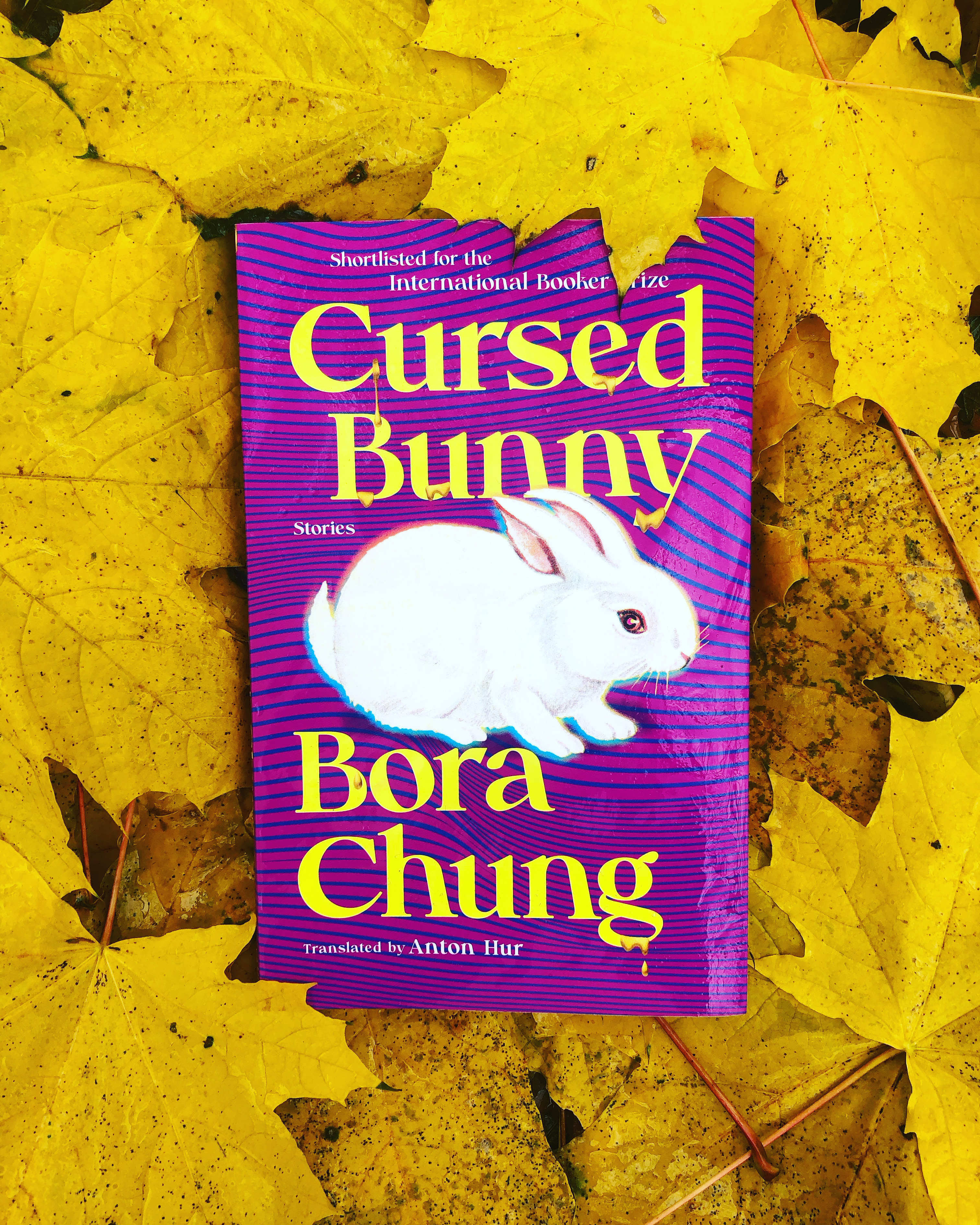
Cursed Bunny by Bora Chung, translated by Anton Hur
“Grandfather used to say, ‘When we make our cursed fetishes, it’s important that they’re pretty.’” While Bora Chung’s genre-defying collection of short stories won’t exactly curse you, it’s highly likely that by the time you finish this collection, you’ll be more than a little obsessed with its intense beauty. Wide ranging and varied, Chung’s stories pull from horror, science fiction, and fantasy with a powerful feminist and anti-capitalist lens. Chung has a background in Slavic literature and translates modern literary works from Russian and Polish into Korean, which is another fascinating influence on her work. Acclaimed Korean translator Anton Hur captures all of the collection’s multitudes, from its moments of sheer terror to its sharp humor and beauty. These gripping stories of power and trauma are perfect for fans of Ha Seong-nan, translated into English by Janet Hong.
The Threshold by Iman Mersal, translated by Robyn Creswell
Iman Mersal is considered by many to be Egypt’s premier poet and I’d argue she’s one of the world’s foremost poets. So it is an immense joy to see The Threshold published this fall. It thoughtfully compiles work from Mersal’s first four collections, stretching over three decades, from 1995 to 2013, allowing readers to witness and experience the breadth of her immense talent. These poems trace her journey as a young outsider poet in Egypt to a new life in a different country. She writes about migration and displacement, borders and boundaries in art and in life, and so much more—all of the dirt in a life. They have been brilliantly translated in all of their ferocious vulnerability, intimacy, and complexity, by translator Robyn Creswell. This is a collection to return to, to inhabit.
The Easy Life by Marguerite Duras, translated by Emma Ramadan and Olivia Baes
I first came to Marguerite Duras’s work by way of Me & Other Writing, a collection of her nonfiction from Dorothy, a publishing project. It’s an unusual place to start reading a writer known more for her fiction, notably the acclaimed international bestseller The Lover, but I came upon it and was struck by the collection and the afterword provided by the translators, Emma Ramadan and Olivia Baes, where they discuss the process of capturing the “strangeness and mystery” of Duras, “Her incantatory rhythm that distracts you from any literal meaning, carrying you into the deep flow of her text, that inner current of genius.” And so it is a thrill to see those same translators approach The Easy Life, Duras’s second novel, published in English for the first time. First published in 1944, this foundational work is a brilliant interior novel of a young woman’s existential breakdown. What may seem like an idyllic French countryside novel is, in the hands of Duras and her masterful translators, a stunning and intense meditation on family, the self, and ultimately the mind.
And don’t miss I Want to Die but I Want to Eat Tteokbokki by Baek Sehee, translated by Anton Hur.
Kibogo by Scholastique Mukasonga, translated by Mark Polizzotti
“And sometimes, a little girl, forgotten at the storyteller’s feet, who refused to go to sleep like the others, stored away in her memory, without really understanding them, the enchanted words of the fable.” In her new collection of interwoven stories, critically acclaimed author of Cockroaches and most recently Igifu, Scholastique Mukasonga writes of Rwanda in the 1940s, depicting the thunderous clash between ancient Rwandan beliefs and the local Christian missionaries. Women are the storytellers here and the power of storytelling and the power of women is a constant amidst the stunning imagery and cutting anti-colonial critique of this collection, translated insightfully by Mark Polizotti. An immense achievement.
And don’t miss Ti Amo by Hanne Ørstavik, translated by Martin Aitken and Dawn by Sevgi Soysal, translated by Maureen Freely.
Motherfield: Poems and Belarusian Protest Diary by Julia Cimafiejeva, translated by Valzhyna Mort and Hanif Abdurraqib
Julia Cimafiejeva is a Belarusian poet and translator, and the author of four poetry collections in Belarusian. She was born in an area of rural Belarus that became a Chernobyl zone when she was a child. Motherfield is her first collection to be brought into English, translated by a remarkable team of co-translators and poets Valzhyna Mort and Hanif Abdurraqib. It opens with sections from her diary from August 2020 to March 2021, where she documents her life in an authoritarian Belarus―protests, escaping the police, internet shutdowns, the detention of her family and friends―and then her agonizing decision to live in exile. The combination of this diary with the poems that follow only adds to the power of this collection. A devastatingly beautiful and essential read.
Seven Empty Houses by Samanta Schweblin, translated by Megan McDowell
Samanta Schweblin, author of the literary sensation Fever Dream and more recently Little Eyes returns with her second short story collection, translated into English by acclaimed translator Megan McDowell. Like her previous collection Mouthful of Birds, I was struck by the elusive and evocative nature of her stories. In Seven Empty Houses, Schweblin focuses on the intimate, on families and relationships, and the home. But these are often empty houses, where loss, grief, and trauma live amongst the boxes and bannisters. Strange and spare, tense and uncanny, the stories in Seven Empty Houses are sure to please fans of Schweblin’s uniquely unsettling style.
Blood Red by Gabriela Ponce, translated by Sarah Booker
I have been eagerly awaiting celebrated Ecuadorian author Gabriela Ponce’s English-language debut about pleasure, pain, and power. And I can now say it utterly destroyed me. Told in a series of stream-of-consciousness fragments, the unnamed narrator of Blood Red recounts an affair, the dissolution of her marriage, and other encounters as she grasps at control over her own body. At the center of the story is the body, specifically a woman’s body, in all of its complexity―all of its blood and sweat and sex. Ponce’s writing in Sarah Booker’s crave-able translation is dark, sexy, and relentlessly good.
Getting Lost by Annie Ernaux, translated by Alison L. Strayer
Earlier this month Annie Ernaux was awarded the 2022 Nobel Prize in literature for “the courage and clinical acuity with which she uncovers the roots, estrangements, and collective restraints of personal memory.” Ernaux is the author of over thirty works of fiction and memoir and is considered by many to be France’s most important literary voice. Newly available in English in a scintillating translation by Alison L. Strayer, Getting Lost is comprised of the unaltered diary entries of Ernaux’s affair with a married Soviet diplomat. Her novel Simple Passion was based on this affair, but Ernaux decided to publish her diary entries as well. “I perceived there was a ‘truth’ in those pages that differed from the one to be found in Simple Passion―something raw and dark, without salvation, a kind of oblation. I thought that this, too, should be brought to light.” And there is a rawness and a darkness to it―an intense intimacy, a relentless honesty, that makes you feel alive.
This post was originally published on Book Riot.

August is Women in Translation Month! Less than 31% of books published in English translation are written by women, according to numbers pulled from the translation database started by Three Percent and Open Letter and now hosted by Publishers Weekly. Founded by literary blogger Meytal Radzinski and now in its ninth year, Women in Translation Month was started to promote women writers from around the world and combat this dreadfully low statistic. As summer rolls around each year, I go through catalogs and read a stack of galleys and pick out some of the titles by women in translation I’m most excited about published in June, July, and August.
With each new year, Women in Translation Month gets bigger, and it’s a joy to see the bookstore displays, literary events, excitement on social media, special sales, and all of the books published around this time of year, often by small independent publishers who make it a priority to include and increase the amount of books they publish by women in translation. This year’s list is a fascinating mixture of debut novels, some returning favorites like author Sayaka Murata and translator Ginny Tapley Takemori, short story collections, poetry, and so much more so I encourage you to check out these hot summer 2022 new releases by women in translation!
Dogs of Summer by Andrea Abreu, translated by Julia Sanches
I love novels of summer. The kind that capture the sticky heat and restlessness that seeps into everything. Everything is just a little more intense in the summer. The emotions a little closer to the surface. It’s as if someone forgot to turn the volume down even though the pace of the world has slowed. Set in a working-class neighborhood on the Canary Islands, high near the volcano of northern Tenerife, Dogs of Summer is a perfect summer novel that follows two best friends as they come of age and their friendship begins to simmer with desire and violence. The writing is a crave inducing mix of bachata lyrics, Canary dialect, and the language of girlhood—gritty, wild, poetic—an exquisite feat by debut author Andrea Abreu and renowned translator Julia Sanches.
Chinatown by Thuận, translated by Nguyen An Lý
Acclaimed Vietnamese author Thuận is a recipient of the Writers’ Union Prize, the highest award in Vietnamese literature and Chinatown is her twelfth novel, but her first to be released in English, although I doubt it will be the last. This novel is an intense and propulsive stream of consciousness journey through Hanoi, Leningrad, and Paris as one woman recounts and tries to make sense of her life and past. The question she spins around is: Is it actually possible to forget in order to live? Chinatown is a rich and surprising novel of love, memory, and loss.
When the Night Agrees to Speak to Me by Ananda Devi, translated by Kazim Ali
Acclaimed Mauritian writer Ananda Devi, who readers may know from Eve out of her Ruins and The Living Days, both translated in staggeringly gorgeous prose by Jeffrey Zuckerman, returns with a collection of poetry, this time translated by writer, poet, and translator Kazim Ali. “Let the truth leave these bodies” writes Devi in a complex and personal collection that blends poetry and autobiography and speaks in powerful truths to desire, violence, and aging. This beautiful bilingual collection also includes a translator’s note, a fascinating interview between Devi and Ali, and a short essay on reading Devi’s poetry by academic Mohit Chandna.
Witches by Brenda Lozano, translated by Heather Cleary
Paloma is dead. Her death brings together city journalist Zoe and Paloma’s cousin Feliciana, a renowned Indigenous curandera or healer in the mountain village of San Felipe. Together the two women explore trauma and healing in the wake of deeply engrained societal violence against women and gender-nonconforming people. Brenda Lozano is one of the most striking voices of a new generation of Latin American writers and I’m in awe of her thoughtful blending of these two narratives and styles. And Heather Cleary’s razor sharp translator’s note examines the political and cultural implications of the choices translators make in their work.
Bad Handwriting by Sara Mesa, translated by Katie Whittemore
I adored Sara Mesa’s sharply written and atmospheric novel of power, privilege, and violence, Four by Four, also translated by Katie Whittemore, and was thrilled to see this new short story collection exploring many of the same themes. And while there was sustained terror and tension in Mesa’s novel, these stories feel even stranger and more unsettling in all that is left unsaid inherently in a short story, each pause and ending feel like a sudden drop into darkness. Bad Handwriting is also notably one of the books in Open Letter’s new Translator Triptych program, along with Wolfskin by Lara Moreno and Mothers Don’t by Katixa Agirre, all translated by Whittemore. The program is designed to honor and empower literary translators by emphasizing their role in the discovery, curation, and promotion of international literature.
Talk to My Back by Yamada Murasaki, translated by Ryan Holmberg
Drawn & Quarterly has the most fantastic offerings of literature in translation and so I was thrilled to hear about this first English translation of Yamada Murasaki’s groundbreaking alt-manga Talk to My Back. The comics were originally serialized in the influential magazine Garo from 1981–1984 when few women were creating alternative manga. Yamada details the interior lives of women in the collection, addressing domesticity, womanhood, and the failures of the nuclear family in startlingly fresh and poignant observations. I’m grateful to translator Ryan Holmberg and the publisher for bringing this book and Kuniko Tsurita’s critically-acclaimed The Sky is Blue with a Single Cloud to readers who can now enjoy the work of previously unpublished women of the alt-manga scene.
Where Dogs Bark with Their Tails by Estelle-Sarah Bulle, translated by Julia Grawmeyer
Where Dogs Bark with Their Tails is a stunning novel that is both one family’s story and a sweeping epic of Guadeloupe and its diaspora that spans decades and oceans. I haven’t stopped thinking about the novel’s characters since I finished it—each is written so intimately and vividly, especially the matriarch Antoine. And while there’s a lot that’s hard to read here, as Guadeloupe’s history is marked by colonialism and capitalism and we watch this family search and struggle to find their way in the world, it is a powerful and compelling novel from debut author Estelle-Sarah Bulle and brilliantly translated by Julia Grawemeyer.
Life Ceremony: Stories by Sayaka Murata, translated by Ginny Tapley Takemori
Sayaka Murata is widely admired for her short stories in Japan so it’s thrilling to see Life Ceremony, Murata’s first short story collection available in English, out this summer in another striking translation by Ginny Tapley Takemori. In the same vein as Convenience Store Woman and Earthlings, this strange, beguiling, and unconventional collection looks closely at societal expectations and pressures to conform to dizzying effect. Her characters are often outcasts and loners, or they exist just on the edge of cultural norms and traditions, and Murata, with humor and brilliance, teases out startling truths about relationships, belonging, individuality, and ultimately the nature of humanity.
This post was originally published on Book Riot.
Every season I pour over the catalogs and galleys of new releases in translation and highlight some of the titles that I’m excited about for Book Riot. I was especially impressed with this season’s incredible offerings of literature translated from Spanish. There were even more stunning titles than usual and much more than I could fit into my original list where I try to highlight the diversity of languages and countries that literature in translation is coming from. So I was inspired to create a list solely of the titles translated from Spanish this season as an added bonus.
Looking overall at this list, I’m stunned by the breadth and depth of what’s currently being translated from Spanish right now. There are critically acclaimed and beloved authors and translators returning with their third or fourth novel right alongside some thrilling debut novels like The Wonders by Elena Medel, translated by Lizzie Davis and Thomas Bunstead and Jawbone by Mónica Ojeda, translated by Sarah Booker. And there’s also a fascinating mixture of form and genre. I was particularly obsessed with the two creative nonfiction titles from this season that I chose to feature: Linea Nigra: An Essay on Pregnancy and Earthquakes by Jazmina Barrera, translated by Christina MacSweeney and When Women Kill by Alia Trabucco Zerán, translated by Sophie Hughes.
It’s a very exciting time to be a lover of Spanish literature in translation!
Tender by Ariana Harwicz, translated by Annie McDermott and Carolina Orloff
Motherhood, womanhood, lust, death, madness. There’s a reason so many readers, myself included, are captivated by Ariana Harwicz’s dark and relentlessly good writing. Harwicz is one of the most radical figures in contemporary literature, often compared to Nathalie Sarraute, Virginia Woolf, and Sylvia Plath. Tender is the third and final book in her “Involuntary Trilogy” after Die, My Love and Feebleminded, and it finds us again in the French countryside, this time following Harwicz’s unnamed narrator’s complex and destructive relationship with her teenage son.
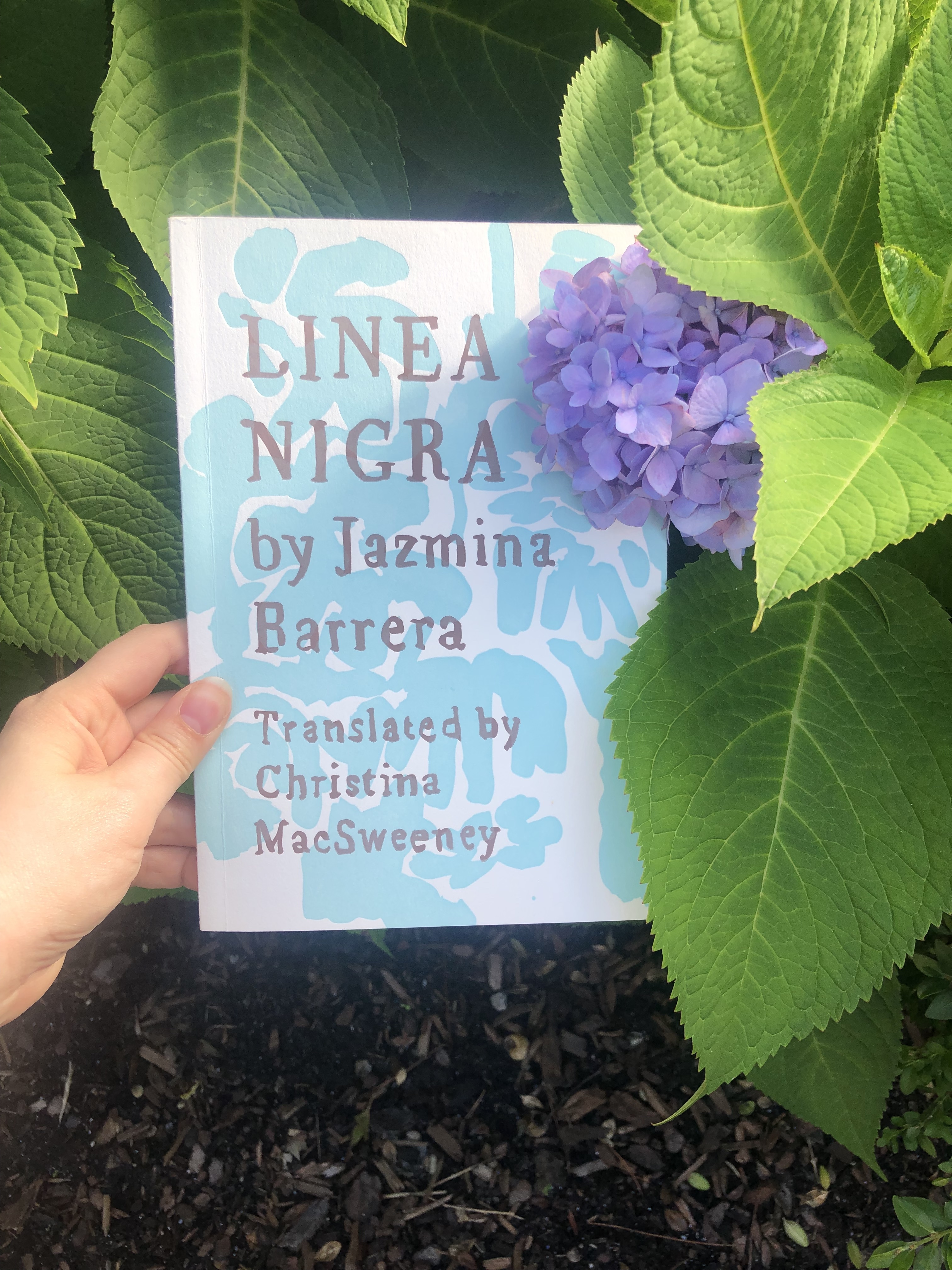
Linea Nigra: An Essay on Pregnancy and Earthquakes by Jazmina Barrera, translated by Christina MacSweeney
I loved Jazmina Barrera’s debut work of nonfiction, On Lighthouses, translated by the legend Christina MacSweeney, where she melds memoir and literary history while examining what lighthouses mean to her and more widely to us all through the the works of Virginia Woolf, Edgar Allan Poe, Ingmar Bergman, and many others. So it’s no surprise that I would love her exploration of pregnancy, motherhood, and art. Like On Lighthouses, it is a memoir and also so much more. Barrera chronicles her own pregnancy and early motherhood while also reflecting on representations of motherhood in art and literature. I was particularly struck by the collection of resources she presents at the back of the book—poems, short stories, interviews, and essays—that she read while breastfeeding. The act of the artist feeding herself as she feeds her child. This urgent and intimate book is one of the most stunning I’ve ever read.
Paradais by Fernanda Melchor, translated by Sophie Hughes
The events of Paradais swirl around the lives of two teenage boys as they decide on a terrifying course of action to change what feels like the inevitability of their lives. Like her impressive and brutal debut novel Hurricane Season, Fernanda Melchor returns with another devastating examination of violence and inequality. The novel is unsparing in its critique of racism, sexism, classism, violence, and more, and while it’s set within and is speaking to contemporary Mexican society, it is arguably universal. This brilliant and raging Cassandra of a novel is meticulously translated by Sophie Hughes who again captures Melchor’s complex and propulsive style.
New and Selected Stories by Cristina Rivera Garza, translated by Sarah Booker with additional translations by Lisa Dillman, Francisca González, Alex Ross, and the author
Cristina Rivera Garza is in my mind one of the most important writers and thinkers of our time. And so it’s an immense treat to see a collection like this one bring together in English translation stories from across her career, drawing from multiple collections over 30 years, with new writing not yet published in Spanish. If you’ve loved any of her complicated and striking works of fiction, like The Iliac Crest, translated by Sarah Booker, her feminist and gothic examination of gender and language, or The Taiga Syndrome, translated by Suzanne Jill Levine and Aviva Kana, her fairy tale meets contemporary Latin American detective novel, or her new work of nonfiction, Grieving: Dispatches from a Wounded Country, translated by Sarah Booker, a hybrid collection of short crónicas, journalism, and personal essays on systemic violence in contemporary Mexico and along the U.S.-Mexico border, then you should pick up this collection immediately.
Chilean Poet by Alejandro Zambra, translated by Megan McDowell
Chilean Poet follows the lives and loves of two Chilean poets across the span of decades. After a chance encounter at a nightclub, aspiring poet Gonzalo reunites with his first love, Carla. Carla now has a 6-year-old son and the three form a new family. Eventually the relationship comes to an end, but we follow the son, Vicente, as he grows up to be a young man and also a lover of poetry. There are many joys of the novel, including Zambra’s fascinating depiction of the Chilean literary scene, a lot of (purposefully) bad poetry, and all of the stylistic inventiveness and wonder that Zambra and acclaimed translator Megan McDowell are known for. A tender and brilliant novel that surprises at every turn, Chilean Poet is a poignant examination of family and art.
Portrait of an Unknown Lady by María Gainza, translated by Thomas Bunstead
María Gainza returns with another novel of art and life in Buenos Aires. Optic Nerve, Gainza’s English-language debut, translated by Thomas Bunstead, stunned readers and critics alike with its story of an Argentinian woman obsessed with art and the many episodes of art history seamlessly interwoven into descriptions of her life—calling it gorgeous, brilliant, and profound. This novel adds an element of mystery and intrigue as the narrator, an art critic and auction house employee, is searching for an enigmatic and legendary forger, rumored to be a woman.
The Wonders by Elena Medel, translated by Lizzie Davis and Thomas Bunstead
The Wonders vividly brings to life the stories of two working women, Maria and Alicia, set against the backdrop of half a century of the feminist movement in Spain. Elena Medel is an award-winning poet, and with this audacious and expansive novel, she’s declared herself a writer to watch as she examines and portrays the ways that class, gender, politics, and society have shaped these women’s lives as well as their own plans to carve out meaning and agency.
Family Album: Stories by Gabriela Alemán, translated by Dick Cluster and Mary Ellen Fieweger
In this collection of short stories, the gifted Ecuadorian author, Gabriela Alemán, offers up a fierce and funny family album of present-day South America, particularly Ecuador. From scuba divers hunting for treasure to a reporter’s search for the secret of a famous Mexican wrestler and a baroness who settles on one of the Galapagos Islands in the 1930s, the characters in these stories are a fascinatingly endless range of humanity that Alemán writes, and Dick Cluster and Mary Ellen Fieweger translate, with wit and grace.
Jawbone by Mónica Ojeda, translated by Sarah Booker
Ecuadorian writer Mónica Ojeda was included on the Bógota39 list of the best 39 Latin American writers under 40 in 2017, and in 2019 she received the Prince Claus Next Generation Award. Jawbone is her English-language debut and it follows Fernanda and Annelise, two inseparably close friends at an elite Catholic school who become ever more involved in the occult with their school friends. “It’s only fun if it’s dangerous,” says Annelise, perfectly capturing the reading experience of this chilling nightmare of girlhood and adolescence, full of body horror, pleasure, and pain. Sarah Booker’s immense brilliance and thoughtfulness comes through in this translation as it does in all of her others and she’s become a translator I’ll follow to any (and all) of her next projects.
When Women Kill by Alia Trabucco Zerán, translated by Sophie Hughes
When Alia Trabucco Zerán’s debut novel The Remainder came out in 2019—also translated by Sophie Hughes—I described it as intense and haunting and a startling reckoning with the history of violence. So it’s fascinating to me that this next project from Alia Trabucco Zerán is very much in line with the idea of a history of violence. In When Women Kill, Alia Trabucco Zerán draws on her training as a lawyer to examine four homicides by Chilean women. These accounts blend true crime, critical essay, and reportage to offer a nuanced and feminist reading of these women’s lives.
This post was originally published on Book Riot.
 Pierce Alquist